For expats weighing their options across southern Europe, the question is rarely about finding *a* luxury property market. Marbella, the French Riviera, the Algarve, Mallorca's inland villages, Provence, all deliver on headline prestige. The harder ask is finding somewhere that doesn't force a trade-off between genuine tranquillity and the conveniences that make international life work. Somewhere you can hear birdsong in the morning, yet reach a Michelin-calibre table or a private aviation terminal within twenty minutes. Somewhere large enough to sustain year-round community, but small enough that you're not another anonymous villa owner.
Benahavís, tucked into the hills behind Marbella, has spent the past two decades quietly perfecting exactly that proposition. Unlike the coastal intensity of Marbella or the remote charm of Mallorca's Tramuntana villages, Benahavís offers mountain peace with city-grade infrastructure minutes away. Compared to the Algarve's inland options, it delivers better year-round climate and dining depth. Against Provence, it wins on tax efficiency and property value. In 2026, as remote work matures and high-net-worth buyers increasingly prioritise quality of life over postcode bragging rights, this Andalusian village deserves closer attention from anyone serious about relocating to Spain.
The village that mastered the balance between tranquillity and access
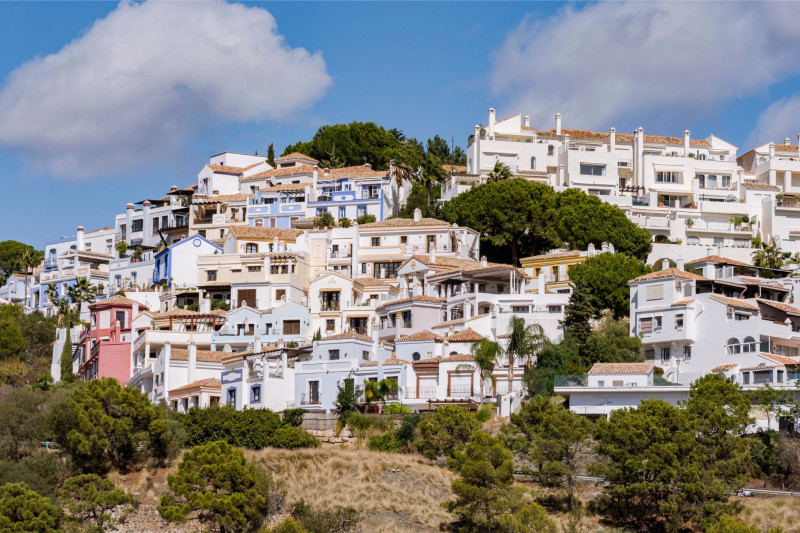
Benahavís sits in the foothills of the Sierra de las Nieves, a setting that delivers the kind of quietude city dwellers fantasise about but rarely commit to. No through traffic, no beachfront crowds, no resort-town hustle. The municipality covers a generous footprint of forested valleys and gentle ridgelines, so properties here come with space, elevation and views that change with the seasons.
Yet this is not rural isolation. Marbella's Golden Mile lies fifteen to twenty minutes down well-maintained roads. Puerto Banús, with its marina, designer boutiques and international dining, is similarly close. Málaga-Costa del Sol Airport, the gateway for most northern European expats, is under an hour away. The proximity is deliberate: Benahavís offers the peace of the mountains without the penalty of being marooned there.
How Benahavís compares to neighbouring hubs
The peace-and-access thesis isn't marketing spin. The numbers bear it out:
Metric | Benahavís | Marbella | Estepona | Sotogrande |
|---|---|---|---|---|
Average villa plot size | 2,500–5,000 m² | 800–1,500 m² | 1,000–2,000 m² | 2,000–3,500 m² |
Distance to Málaga Airport | 55 km | 50 km | 75 km | 110 km |
Restaurant density (per 1,000 residents) | ~12 | ~8 | ~6 | ~5 |
Average days of sunshine per year | 320+ | 320+ | 320+ | 320+ |
Benahavís stands out on plot size, offering the kind of land parcels that support real privacy and customisation. Its restaurant density reflects the village's culinary reputation, a genuine lifestyle differentiator. The airport distance sits in a sweet spot: close enough for convenience, far enough to avoid flight paths and tourism churn. Sunshine is uniform across the Costa del Sol, but the elevation in Benahavís adds cooler evenings in summer, a subtle climate advantage that expats from northern Europe appreciate.
For expats who work remotely or run location-independent businesses, this balance proves unusually practical. You can take morning calls from a terrace overlooking pine forest, then meet clients or partners in Marbella for lunch. You can enjoy the village's slower pace day to day, but tap into international schools, private healthcare and logistics infrastructure whenever needed. Recent infrastructure upgrades, including the 2025 completion of fibre-optic rollout across all residential zones and the ongoing AP-7 motorway resurfacing project scheduled to finish in late 2026, have tightened connectivity further. It's the kind of setup that sounds implausible on paper but works seamlessly in practice, and it's a major reason the area has quietly built a loyal expat base over the past decade.
Luxury real estate that prioritises space and privacy
The Costa del Sol has no shortage of luxury product, but much of it trades in density. Gated communities, contemporary apartment blocks, developments where every neighbour can see your pool. Benahavís takes a different approach. The topography and planning culture here favour detached villas on generous plots, often with significant land around them. Privacy isn't an afterthought or a premium add-on. It's baked into the geography.
Many properties sit on hillside parcels that afford natural screening and unobstructed sightlines over valleys or towards the coast. Architectural styles vary, contemporary minimalism sits alongside renovated cortijos and Andalusian-inspired estates, but the common thread is space. Gardens large enough for mature trees, driveways that keep you well back from the road, terraces where you can entertain without broadcasting it to a dozen balconies.
For families, the implications are immediate. Children can play outdoors safely. Pets have room to roam. You can host without the logistical compromises that come with apartment living. For retirees or semi-retired professionals, the privacy supports a different kind of luxury: the freedom to structure your day without reference to shared facilities, lift schedules or community rules committees.
If you're assessing properties in the area and want expert guidance on what works for expats specifically, we've published a detailed guide to buying property in Benahavís. It covers everything from typical plot configurations to due diligence steps tailored for international buyers.
Property customisation: turning vision into reality
The villa-led market in Benahavís means that properties here tend to offer better scope for customisation and value enhancement than coastal apartments or tightly planned communities. Whether that's adding a home office suite, upgrading outdoor kitchens, installing wellness amenities or reconfiguring layouts, buyers here have the physical and regulatory latitude to make spaces genuinely their own. That flexibility matters to expats who plan to stay long-term and want homes that can evolve with them.
What customisation actually looks like in practice
Benahavís municipal planning permits modifications to existing villas and new builds within established density guidelines. Common expat-driven upgrades include:
Wine cellars and temperature-controlled storage. Popular with northern European buyers who import collections or entertain regularly. Costs typically range from €15,000 for a basic climate-controlled room to €60,000+ for bespoke underground cellars with tasting areas.
Guest casitas or independent suites. Separate accommodation for visiting family or staff. Building a detached 50–70 m² casita averages €80,000–€120,000 depending on finishes, with planning approval timelines of three to six months for straightforward additions on larger plots.
Equestrian facilities. Several properties in the municipality have land suitable for stables, paddocks or small arenas. Basic stable conversions start around €30,000, while purpose-built facilities with multiple boxes and covered arenas can exceed €150,000.
Outdoor wellness and leisure. Infinity pools, spa pavilions, outdoor gyms, fire-pit lounges. These vary widely, from €25,000 for a high-quality outdoor kitchen to €100,000+ for integrated pool-and-spa complexes.
Smart home and security integration. Automated lighting, climate control, perimeter surveillance, vehicle gates. Full-property systems typically cost €20,000–€50,000 installed.
Planning permission for cosmetic and non-structural changes is generally straightforward and can be handled within two to three months. Structural additions, new buildings or significant plot alterations require architect-certified submissions and municipal review, extending timelines to four to eight months in most cases. Working with a local architect familiar with Benahavís planning culture streamlines the process considerably, as does engaging a gestoría to manage documentation.
The takeaway: if you're buying in Benahavís with a vision for how the property should evolve, the regulatory and physical environment supports that ambition far better than denser coastal alternatives.
A culinary heritage that elevates everyday living
Benahavís has earned the nickname "the dining room of the Costa del Sol," a reputation rooted in an improbable concentration of high-quality restaurants for a village of its size. The tradition began decades ago and has been sustained by a mix of local pride, savvy tourism strategy and the steady influx of expat residents who expect serious food.
Walk through the old village and you'll find family-run establishments serving refined takes on Andalusian classics, contemporary European kitchens that change menus seasonally, and specialists in everything from wood-fired meats to inventive tapas. The standard is notably high, and the atmosphere remains relaxed. You don't need a reservation six weeks out or a stylist-approved outfit. You just need to appreciate good cooking and enjoy lingering over a meal.
Recent additions keep the dining scene fresh. Alannia, which opened in early 2026 near the Los Arqueros golf resort, offers farm-to-table Mediterranean cuisine with a zero-waste kitchen philosophy and has quickly become a favourite among environmentally conscious expats. The opening reflects Benahavís's ability to attract talent and investment without sliding into tourist-trap mediocrity.
For expats, this culinary depth transforms daily life in subtle but meaningful ways. Dining out becomes a pleasure rather than a project. Entertaining guests, whether visiting family or new friends from the expat community, is straightforward because you have options that won't disappoint. The social fabric of the village is lubricated by these spaces, making it easier to integrate and build relationships beyond the usual expat bubble.
The food culture also reflects something broader about Benahavís: a commitment to quality of life that extends beyond real estate metrics. The village has retained its character and its craft economy even as property values have climbed. That's a delicate balance many destinations fail to maintain, and it's one of the reasons expats who settle here tend to stay.
The practical advantages: governance, safety and infrastructure
Spain's appeal to expats rests partly on lifestyle, but the foundation is governance. The country offers political stability, transparent legal frameworks for property ownership, and well-established pathways for residency, particularly for high-net-worth individuals and remote workers. Benahavís benefits from all of this, with the added advantage of being part of Andalusia, a region that has actively courted international investment and streamlined processes for foreign buyers.
Safety is another headline benefit. Benahavís and the surrounding municipalities consistently rank among the safest areas in Spain, with low crime rates and a visible, professional Guardia Civil presence. For families with children or retirees prioritising security, this record provides reassurance that's hard to overstate.
Infrastructure is equally solid. High-speed fibre internet reaches most developments, essential for remote work or streaming-dependent households. Roads are well maintained and engineered for the terrain. Utilities are reliable. Private healthcare options in nearby Marbella meet northern European standards, with English-speaking practitioners and straightforward insurance arrangements. International schools, including well-regarded British and American curricula, are within commuting distance.
These are the unglamorous elements that don't feature in property brochures but determine whether a lifestyle transplant actually works. Benahavís delivers on all of them, which is why so many expats who arrive on exploratory visits end up making the move.
Golf, nature and recreation without compromise
For many expats, particularly those from northern climates, access to year-round outdoor recreation is a non-negotiable part of the southern Spain value proposition. Benahavís and its surroundings offer exceptional variety.
The municipality is home to several championship golf courses, with more in neighbouring towns. These aren't tourist gimmicks. They're serious layouts that host international tournaments and attract dedicated players. If golf is central to your lifestyle, Benahavís provides ready access without the need to join oversubscribed coastal clubs or navigate seasonal crowds.
Equally important for a different cohort are the hiking and mountain-biking trails that thread through the Sierra de las Nieves. The terrain ranges from gentle valley walks to challenging ridge routes, and the scenery shifts from Mediterranean scrub to pine forest to high-altitude views. For expats who value outdoor activity as part of their weekly routine, this network is a tangible quality-of-life asset.
The climate makes all of it usable year-round. Winter mornings might be cool, but afternoons are mild and sunny. Summer heat is moderated by elevation and evening breezes. You're not confined to a narrow seasonal window or forced to travel elsewhere for the kind of outdoor access that many northern Europeans crave.
A worked example: how expat life in Benahavís actually functions
Consider a composite profile drawn from typical expat patterns in the village: a semi-retired couple in their early fifties, one a remote technology consultant, the other a freelance marketing strategist. They relocated from the south of England in late 2025, motivated by quality of life, tax efficiency and the desire for more space.
Weekly routine:
Mornings involve work calls from a home office overlooking the valley, typically three to four hours of focused client time. Mid-morning, a walk with the dog on trails above the villa or a quick drive to the village for coffee. Lunch is often at home, occasionally at a local restaurant if meetings run into the afternoon. Two or three afternoons a week include golf at Los Arqueros or a gym session in Marbella. Evenings are quiet, dinner at home or with friends at one of the village restaurants. Weekends mix hiking, trips to the coast, entertaining visiting family, or exploring Granada and Ronda.
Monthly cost breakdown:
Villa rental (while searching for purchase): €3,500. Utilities and internet: €250. Groceries and household: €800. Dining out (8–10 meals): €600. Fuel and car expenses: €200. Gym and golf memberships: €400. Healthcare insurance (private): €350. Miscellaneous and travel: €500. Total: approximately €6,600 per month, comfortably within their budget and significantly lower than equivalent lifestyle costs in southern England.
Decision criteria that mattered:
Proximity to Málaga airport for client visits and trips back to the UK. Reliable internet for remote work. Access to English-speaking healthcare and tradespeople. A social environment with other expats but enough Spanish character to feel like a real place, not an enclave. Plot sizes large enough for a dog and future guests. A restaurant scene that wouldn't bore them after six months.
Benahavís ticked every box, and their experience reflects a pattern repeated across dozens of similar relocations each year. The village works because it doesn't demand lifestyle sacrifices. It enhances what expats valued at home and adds dimensions, space, climate, pace, that were unavailable there.
Frequently asked questions: the expat practicalities
How long does it take to establish tax residency in Spain?
You become a Spanish tax resident if you spend more than 183 days in Spain during a calendar year, or if your centre of economic interests is in Spain. Most expats planning a permanent move register for residency within three months of arrival via the nearest Oficina de Extranjeros, in this case Marbella. The process requires proof of income or sufficient funds, private healthcare insurance, and a clean criminal record. Once registered, you receive a foreigner identity number (NIE) and, if staying long-term, a TIE residency card. Residency and tax residency are separate but connected: registering as a resident usually triggers tax obligations after crossing the 183-day threshold.
What healthcare access do expats have in Benahavís?
Benahavís itself is a small municipality, so primary care is handled by a local health centre (Centro de Salud de Benahavís) in the village, approximately 2 km from most residential zones. For specialist care and emergency services, expats use facilities in nearby Marbella. Hospital Costa del Sol, a public hospital, is approximately 18 km from central Benahavís. Private options include HC Marbella International Hospital (15 km) and Quirónsalud Marbella (16 km), both of which have English-speaking staff and accept international insurance. Many expats maintain private health insurance for faster access and broader choice, with annual premiums typically ranging from €1,500 to €4,000 per person depending on age and coverage.
Are there international schools nearby?
Yes, several well-regarded international schools operate within a 20 to 30-minute drive. Aloha College (British curriculum) in Nueva Andalucía is approximately 12 km from Benahavís. The English International College (also British) in Marbella is around 18 km. Swans International School (British and IB) in Marbella is roughly 20 km. The American School of Marbella offers a U.S. curriculum and sits about 22 km away. Laude San Pedro International College (British) is approximately 15 km. These schools cater specifically to expat families and offer continuity for children relocating from northern Europe or North America.
What is the property purchase process for non-residents?
Non-residents can buy property in Spain without restriction. The process begins with obtaining an NIE, essential for any financial transaction. Buyers typically open a Spanish bank account to facilitate payments and set up direct debits for utilities and taxes. Legal due diligence involves hiring an independent lawyer (not the agent's or seller's lawyer) to verify title, check for debts or encumbrances, confirm planning compliance, and review contracts. A deposit (usually 10 per cent) is paid upon signing a private purchase contract (contrato de arras). The balance is paid at notary completion, where title transfers. Buyers pay a property transfer tax (around 8 to 10 per cent in Andalusia for resale properties) plus notary and registration fees (typically 1 to 2 per cent). The entire process, from offer to completion, usually takes two to three months. Engaging a gestoría to manage tax filings, registrations and utility transfers simplifies post-purchase administration.
Why Benahavís works when other destinations falter
Luxury property markets are easy to find. Markets that sustain expat communities long-term without diluting the character that attracted them in the first place are far rarer. Benahavís has managed both because it never tried to be Marbella. It stayed a village with serious restaurants and generous plots, and that restraint, combined with excellent access and infrastructure, created something genuinely unusual.
For expats in 2026, especially those who have done the homework and visited multiple options across southern Europe, Benahavís represents a mature choice. It's not the flashiest name on the list, but it's the one that delivers on the quiet luxury and functional lifestyle that make relocation sustainable. If that's what you're after, few places do it better.
Ready to explore properties that match this profile? Our team specialises in helping expats find homes in Benahavís that work for their specific needs, whether that's a turnkey villa, a renovation project, or a plot for a custom build. Get in touch and we'll walk you through what's available and what makes sense for your timeline and budget.