The Golden Mile in 2026: A Market Apart
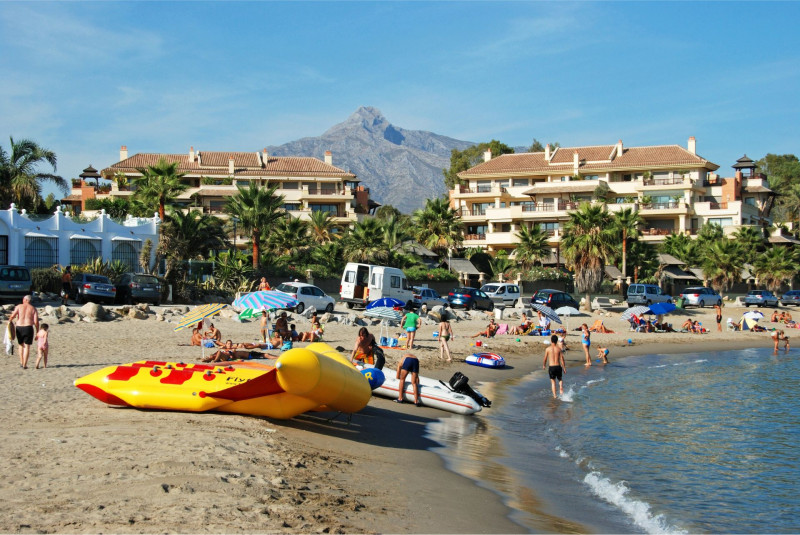
The Golden Mile, the prestigious ribbon of coastline stretching west from Marbella's centre towards Puerto Banús, continues to occupy a category of its own within the broader property landscape. This six-kilometre corridor, home to some of Europe's most exclusive villas, gated communities and beachfront estates, demonstrates a resilience rooted in scarcity, prestige and enduring international appeal. As we move through 2026, several converging factors are reshaping how buyers, sellers and investors approach this distinctive market.
Recent observable data underscores the area's continued momentum. Marbella municipality approved 47 luxury residential projects in 2025, with the majority concentrated along or near the Golden Mile, reflecting sustained developer confidence. Completed transactions in the final quarter of 2025 showed average prices for frontline beach properties reaching €12,800 per square metre, a figure that masks significant variation: trophy villas on premier plots commanded upwards of €18,000 per square metre, while properties requiring modernisation settled closer to €9,000. Supply constraints remain structural: only 11 new-build villa plots received final planning consent across the Golden Mile in 2025, reinforcing the fundamental scarcity that underpins value.
Understanding what lies ahead requires looking beyond headline figures. The Golden Mile operates on different fundamentals than volume-driven residential markets. Supply remains constrained by geography and planning policy, while demand draws from a global pool of high-net-worth individuals and institutions who view these assets through a multi-generational lens rather than short-term speculation.
Demand Drivers Reshaping the Golden Mile
Three primary forces are influencing demand patterns across the Golden Mile in 2026, each reinforcing the area's position as a safe-harbour asset class.
First, the flight to irreplaceable locations has intensified. Buyers increasingly distinguish between generic luxury developments and addresses that cannot be replicated. The Golden Mile's combination of established prestige, mature infrastructure and proximity to key amenities creates a value proposition that new-build projects in emerging districts struggle to match, regardless of specification. The corridor's immediate access to Marbella Club, Puente Romano and established international schools represents decades of accumulated infrastructure that newer coastal zones cannot duplicate.
Second, currency movements and geopolitical uncertainty continue to drive capital towards stable jurisdictions with robust property rights. Spain's legal framework for foreign property ownership, combined with the euro's role as a reserve currency, positions the Golden Mile favourably when global investors seek tangible assets in markets they perceive as predictable and transparent. This dynamic supports both transactional activity and long-term holding strategies.
Third, lifestyle recalibration following recent years of remote work has crystallised buyer priorities. Properties offering space, privacy and immediate access to world-class facilities command premiums that would have seemed excessive a decade ago. The Golden Mile's concentration of these attributes, particularly plots exceeding 2,000 square metres with direct beach access, positions it favourably as purchasers allocate larger budgets to primary residences that function as multi-purpose environments.
The New Buyer Profile
The typical Golden Mile purchaser in 2026 differs meaningfully from counterparts in previous cycles. While wealth remains the common denominator, the composition and motivations of this cohort have evolved.
Analysis of buyer demographics and transaction patterns reveals several notable shifts:
Nationality and Origin Mix:
- UK and Northern European buyers, historically dominant, now represent approximately 38% of transactions, down from roughly 52% in 2023-2024
- Middle Eastern purchasers have increased their share to around 28%, up from 18% two years prior, driven by Gulf State wealth diversification and lifestyle migration
- Latin American buyers, particularly from Argentina, Colombia and Venezuela, account for a growing 15%, reflecting regional currency volatility and political uncertainty
- North American purchasers remain stable at approximately 12%, with Canadian buyers notably active
Transaction Size and Structure:
- Average transaction values for completed Golden Mile sales in late 2025 reached €4.7 million, compared to €3.9 million in 2023, reflecting both price appreciation and buyer preference for larger, more prestigious properties
- The proportion of transactions exceeding €10 million rose to 22% of total sales, versus 14% two years earlier
- Mid-market Golden Mile properties (€2-4 million) experienced slower turnover, suggesting bifurcation between trophy assets and everything else
Financing vs Cash Dynamics:
- Cash purchases accounted for approximately 71% of Golden Mile transactions in 2025, slightly higher than the 67% recorded in 2023-2024
- Among financed purchases, loan-to-value ratios averaged just 48%, indicating buyers use mortgages for liquidity management rather than affordability necessity
- International private banks report increased appetite for euro-denominated secured lending against Golden Mile properties, viewing these assets as high-quality collateral
Younger wealth is increasingly visible. Entrepreneurs who monetised technology ventures, crypto holdings or emerging-market opportunities now compete with traditional old-money dynasties. These buyers bring different timelines and expectations. They value connectivity infrastructure, sustainability credentials and design innovation alongside heritage and address prestige.
Family office activity has also intensified. Rather than individual purchasers, many transactions involve structured entities managing inter-generational wealth. This introduces more rigorous due diligence, longer decision cycles and a heightened focus on long-term capital preservation rather than short-term appreciation. For sellers, understanding this shift matters: patience during the transaction process often separates successful completions from collapsed deals.
End-user occupiers still dominate, but the line between primary residence and investment asset has blurred. Properties are increasingly chosen for their ability to serve multiple purposes: family home, corporate hosting venue, investment portfolio anchor. This multi-functional calculus supports higher valuations for properties offering flexibility and scale.
Buyer Priorities: What Has Changed
Priority Factor | 2023-2024 Buyer Focus | 2026 Buyer Focus |
|---|---|---|
Lifestyle Amenities | Proximity to beach clubs and golf courses | Integrated wellness facilities, private spa, home gym |
Sustainability | Energy certificate compliance | Active systems: solar arrays, geothermal, water recycling, EV infrastructure |
Due Diligence Timeline | 4-6 weeks average | 8-12 weeks; includes architectural surveys, environmental reports, legal structure review |
Technology Integration | Basic smart home systems acceptable | Comprehensive automation, cybersecurity, integrated AV, climate control |
Privacy & Security | Gated community sufficient | Perimeter systems, discrete access, advanced CCTV, often personal security accommodation |
Outdoor Space | Garden and pool expected | Multifunctional outdoor zones: outdoor kitchens, entertainment areas, landscaped gardens with native planting |
This evolution reflects a more sophisticated, demanding buyer who approaches the purchase as a long-term lifestyle and investment decision requiring institutional-grade diligence and future-proofed specifications.
Golden Mile Performance vs Broader Prime Markets
Performance Metric | Golden Mile Marbella | London Prime Central | Dubai Palm Jumeirah | French Riviera (Cap d'Antibes) |
|---|---|---|---|---|
Typical Gross Rental Yield | 2.8-3.5% | 2.5-3.2% | 4.5-5.8% | 2.2-3.0% |
Liquidity (Avg. Days to Sale) | 145-210 days | 180-270 days | 90-140 days | 200-320 days |
5-Year Capital Appreciation (2021-2026 est.) | +42-48% | +18-24% | +55-68% | +28-35% |
Price Volatility (Standard Deviation) | Moderate | Low | High | Low |
Capital Preservation Score | High | Very High | Moderate | Very High |
Supply Constraint Level | Severe | Severe | Moderate | Severe |
This comparison illustrates the Golden Mile's positioning: it offers stronger capital appreciation than London or the French Riviera, with comparable capital preservation characteristics, while maintaining liquidity superior to competing European prime markets. The trade-off versus Dubai is clear: higher yields and faster sales cycles there come with greater volatility and less established legal and cultural frameworks. For conservative wealth preservation with growth potential, the Golden Mile occupies a compelling middle ground.
Price Trends and Valuation Dynamics
Predicting precise price movements remains an imperfect exercise, particularly at the rarefied end of the market where each property is essentially unique. However, observable patterns through 2026 offer useful guidance.
Prime stock continues to separate from secondary offerings. The gap between best-in-class properties and everything else has widened. Exceptional residences with uncompromising specifications, ideal orientations and flawless provenance achieve prices that establish new benchmarks, while properties requiring modernisation or lacking standout features face more challenging negotiations.
Per-square-foot metrics become less meaningful as lot size, views and intangible factors drive value. A compact penthouse with panoramic vistas may command multiples of a larger but poorly configured alternative. Buyers pay significant premiums for scarcity attributes: corner positions, garden access, architectural pedigree, privacy from neighbouring properties.
The valuation process itself has become more sophisticated. Purchasers arrive with detailed comparable analysis, often spanning international markets. Sellers benefit from professional valuations that account for nuanced factors beyond crude size-and-location formulas. Understanding where a specific property sits within the micro-market hierarchy is essential for realistic pricing and successful transactions.
Investment Outlook: Why the Golden Mile Remains Compelling
From a pure investment perspective, the Golden Mile presents a distinctive case in 2026. Rental yields remain modest compared to emerging districts or higher-density developments, typically ranging between 2.8% and 3.5% gross for long-term lets. This characteristic actually signals market strength rather than weakness. Compressed yields reflect capital appreciation expectations and the asset-class safety premium investors assign to irreplaceable locations.
Several factors underpin the continued investment case. Planning constraints ensure supply remains limited, creating structural scarcity that protects values during broader market corrections. Marbella's planning framework strictly controls density and new development within the Golden Mile corridor, and the mature nature of the area means most available land is already built out. The Golden Mile's established reputation insulates it from the boom-bust cycles that affect speculative areas dependent on infrastructure promises or regeneration optimism.
Liquidity, often overlooked, represents another advantage. Despite high absolute price points, the Golden Mile maintains a deeper pool of potential purchasers than many assume. Properties may take longer to sell than mass-market units, averaging 145-210 days on market compared to 60-90 days for standard Marbella residential, but transactions do occur even in subdued conditions. This liquidity premium matters for investors who may need to rebalance portfolios or respond to changing circumstances.
Currency diversification also plays a role. For international investors, Golden Mile property provides exposure to the euro and a stable EU jurisdiction while delivering the tangible security of real assets. This dual benefit supports valuations during periods when purely financial instruments face volatility.
Worked Investment Example: Five-Year Hold Scenario
Consider a hypothetical acquisition in 2026 of a mid-tier Golden Mile villa: a four-bedroom, 450-square-metre property on a 1,200-square-metre plot, requiring modest cosmetic updates but structurally sound and well-located within an established community.
Purchase Details:
- Acquisition price: €4,500,000
- Acquisition costs (transfer tax, legal, registration): €450,000 (approximately 10% of purchase price)
- Immediate refurbishment: €300,000
- Total initial outlay: €5,250,000
Holding Period Assumptions (Five Years):
- Annual capital appreciation: 4.5% (conservative estimate based on comparable European prime coastal markets over similar periods)
- Gross rental yield: 3.0% annually on initial purchase price
- Annual holding costs (property tax, community fees, maintenance, insurance): €35,000
- Occupancy rate: 75% (accounting for personal use and vacancy)
Year-by-Year Breakdown:
*Year 1:*
- Property value: €4,702,500
- Rental income: €135,000 gross; €101,250 at 75% occupancy
- Net income after holding costs: €66,250
*Year 2:*
- Property value: €4,914,113
- Rental income: €135,000 gross; €101,250 at 75% occupancy
- Net income after holding costs: €66,250
*Year 3:*
- Property value: €5,135,248
- Rental income: €135,000 gross; €101,250 at 75% occupancy
- Net income after holding costs: €66,250
*Year 4:*
- Property value: €5,366,334
- Rental income: €135,000 gross; €101,250 at 75% occupancy
- Net income after holding costs: €66,250
*Year 5:*
- Property value: €5,607,819
- Rental income: €135,000 gross; €101,250 at 75% occupancy
- Net income after holding costs: €66,250
Exit Scenario (End of Year 5):
- Sale price: €5,607,819
- Sale costs (agent commission, legal): €224,313 (4% typical total)
- Net sale proceeds: €5,383,506
- Cumulative net rental income (five years): €331,250
- Total return: €5,714,756
- Initial outlay: €5,250,000
- Absolute gain: €464,756
- Percentage return: 8.9% over five years
- Annualised return: approximately 1.7%
This conservative scenario illustrates a modest but positive return, even before accounting for leverage. An investor using 50% financing at 4% interest would see different dynamics: higher annual costs offset by lower initial equity deployment, potentially improving return on equity despite interest expense.
Ten-Year Extension:
Extending the hold to ten years with the same 4.5% annual appreciation assumption would see the property reach approximately €7,030,000 in value. Cumulative rental income (net of holding costs) would total €662,500. After sale costs, the investor would realize approximately €7,355,000, representing a 40% total return on the original €5,250,000 outlay, or roughly 3.4% annualised.
These figures demonstrate that Golden Mile investment returns derive primarily from capital appreciation and wealth preservation rather than income generation. The strategy suits investors with long time horizons, low leverage requirements and diversification objectives rather than those seeking high current income.
What Property Owners Should Consider in 2026
For current owners, several considerations should inform decision-making through the remainder of 2026 and beyond.
Condition and presentation matter more than ever. In a market where buyers have time to be selective, properties that require imagination or tolerate deferred maintenance face significant discounts. Estate agents report that well-maintained, move-in-ready properties achieve 12-18% premiums over comparable properties requiring substantial work. Owners contemplating sale within the next few years should address visible deficiencies now, both to maximise eventual proceeds and to reduce time on market.
Market timing requires patience and realism. The days of accepting any reasonable offer to avoid missing the peak have passed. Equally, waiting for unrealistic prices based on outlier transactions wastes valuable exposure periods. Understanding the specific micro-market for your property type, engaging professional advice, and pricing competitively within that context produces better outcomes than rigid adherence to aspirational figures.
For those holding long-term, strategic improvements deserve consideration. Sustainability upgrades (solar installations, advanced insulation, water management systems), smart-home integration and flexible space planning all enhance appeal to the emerging buyer profile. These investments pay dividends both in eventual sale proceeds and in interim enjoyment and utility. Properties with comprehensive sustainability credentials commanded 8-11% premiums in late 2025 transactions, a gap likely to widen as regulatory requirements and buyer preferences intensify.
Tax and estate planning also warrant attention. High-value properties carry implications for Spanish wealth tax, non-resident income tax on rental earnings, capital gains and ongoing holding costs. Professional advice tailored to individual circumstances helps optimise outcomes and avoid preventable liabilities.Structuring ownership through appropriate vehicles, understanding bilateral tax treaties and planning for succession all require specialist input.
Risks and Headwinds: A Balanced Perspective
While the Golden Mile's long-term fundamentals remain sound, several risks and potential headwinds deserve acknowledgement. Balanced analysis requires recognising challenges alongside opportunities.
Regulatory and Tax Policy Shifts:
Spain's political landscape introduces uncertainty around wealth taxation and property-related levies. Wealth tax (Impuesto sobre el Patrimonio) varies by autonomous community, and Andalusia has historically offered generous exemptions. However, national government discussions around harmonising or increasing wealth tax rates could materially affect holding costs for high-value properties. Similarly, potential changes to capital gains tax treatment, non-resident taxation or inheritance rules warrant monitoring. Regulatory risk is inherent in any jurisdiction, but political cycles create periodic uncertainty that can dampen buyer sentiment.
Oversupply in Adjacent Luxury Zones:
While the Golden Mile itself faces severe supply constraints, adjacent areas including Nueva Andalucía, Estepona and Benahavís have seen substantial luxury development activity. If these zones successfully attract buyers who might otherwise have targeted the Golden Mile, competition for the same pool of international wealth could intensify. The risk is particularly acute in the €2-5 million segment, where buyers may trade address prestige for newer specifications and larger plots in less established locations. This dynamic could pressure mid-tier Golden Mile pricing even as trophy properties continue appreciating.
Climate and Environmental Factors:
Southern Spain faces long-term water scarcity challenges, with the region experiencing below-average rainfall in recent years. Restrictions on garden irrigation, pool filling and water-intensive landscaping could affect property desirability and running costs. Additionally, coastal erosion and sea-level rise, though gradual, pose eventual risks to beachfront properties. While these factors operate on decadal timescales, they introduce uncertainty that sophisticated buyers incorporate into long-term valuations.
Market Liquidity in Downturns:
The Golden Mile's liquidity advantage holds during normal and strong market conditions. However, during severe economic contractions or credit crises, the market for properties exceeding €5 million can effectively freeze. Sellers requiring liquidity under distressed circumstances may face significant discounts or extended marketing periods. This risk matters particularly for leveraged investors or those who may need to realise value during adverse conditions.
Currency Volatility:
For non-eurozone buyers, exchange rate movements introduce additional risk and opportunity. Sterling, dollar or Middle Eastern currency fluctuations can materially affect the effective purchase price and returns on exit. A UK buyer who purchased in 2020 at favourable GBP/EUR rates and sells in 2026 after sterling depreciation may find euro-denominated gains partially or fully offset by currency losses when repatriating proceeds.
Geopolitical and Reputational Risk:
Luxury property markets can face reputational challenges related to anti-money laundering scrutiny, sanctions enforcement and political pressure around foreign ownership. While Spain's legal framework is robust, increased regulatory compliance requirements, beneficial ownership reporting and source-of-funds documentation can lengthen transaction timelines and introduce friction. The Golden Mile's appeal to international wealth makes it particularly visible to regulatory authorities.
Acknowledging these risks does not negate the investment case, but it does emphasise the importance of thorough due diligence, appropriate structuring, realistic return expectations and, for many investors, geographic diversification. The Golden Mile should be part of a balanced portfolio rather than a concentrated bet, and holding periods should align with the ability to ride out periodic market disruptions.
Frequently Asked Questions
Is the Golden Mile still a good investment in 2026?
The Golden Mile remains a compelling investment for buyers with appropriate expectations and time horizons. It excels as a wealth preservation vehicle and lifestyle asset, offering scarcity, prestige and long-term capital appreciation potential. However, rental yields are modest (2.8-3.5% gross), liquidity requires patience (average 145-210 days to sale), and returns depend heavily on multi-year holding periods. It suits investors prioritising capital preservation, euro-zone diversification and lifestyle benefits over high current income or short-term gains. For those seeking immediate cash flow or rapid appreciation, other markets may offer better risk-return profiles.
What price range defines Golden Mile property in 2026?
Golden Mile properties span a wide range, but meaningful categorisation helps. Entry-level apartments in older complexes start around €800,000-1,200,000. Mid-market villas and modern apartments typically range from €2,500,000 to €6,000,000. Premium villas with substantial plots, beachfront access or exceptional specifications command €8,000,000 to €20,000,000. Trophy estates, architectural landmarks and frontline beach villas with direct access can exceed €25,000,000, with a handful of exceptional properties listed above €40,000,000. The majority of transaction volume occurs in the €3-8 million band.
How long do Golden Mile sales take to complete?
Transaction timelines vary significantly based on complexity, buyer readiness and property specifics. A straightforward cash purchase with minimal due diligence may complete in 8-10 weeks from accepted offer to final notary signing. More typical transactions, particularly involving international buyers, family offices or financing, average 12-16 weeks. Complex deals with planning issues, structural concerns identified during surveys, or intricate ownership structures can extend to 20-24 weeks or longer. Sellers should expect longer timelines than mass-market property and maintain patience, particularly when buyers conduct thorough diligence (increasingly common in 2026). Solicitors, agents and all parties maintaining open communication helps avoid preventable delays.
What are the biggest risks of buying on the Golden Mile?
Key risks include market illiquidity during economic downturns (properties can take many months to sell if circumstances force a sale during adverse conditions), regulatory changes affecting taxation or ownership structures, currency volatility for non-eurozone buyers, and the potential for overpaying in a competitive bidding situation. Environmental factors such as water restrictions and long-term climate impacts also warrant consideration. Buyers should conduct exhaustive due diligence, engage experienced local legal counsel, ensure financial resilience to hold through market cycles, and avoid excessive leverage. Understanding the total cost of ownership, including annual taxes, community fees and maintenance, prevents unwelcome surprises.
How does Golden Mile property compare to other prime European coastal markets?
The Golden Mile offers stronger capital appreciation than London Prime Central or the French Riviera over recent cycles (approximately 4-5% annually versus 2-3%), while maintaining comparable capital preservation characteristics. Yields are similar (2.8-3.5% versus 2.2-3.2%), reflecting the premium buyers pay for established prestige and scarcity. Liquidity is better than the French Riviera but slower than Dubai's prime zones. Climate, lifestyle amenities and tax treatment favour the Golden Mile for many international buyers, though personal circumstances, tax residency and specific objectives ultimately determine optimal choices. Diversification across multiple prime markets often provides better risk management than concentration in a single location.
What should buyers prioritise when evaluating Golden Mile properties?
Prioritise location micro-dynamics (specific street, orientation, immediate neighbours), land size and configuration (privacy, usable outdoor space, potential for future enhancement), build quality and specifications (comprehensive surveys are essential), and flexibility for future adaptation (can the property accommodate evolving needs and tastes?). Sustainability credentials, smart-home infrastructure and wellness facilities increasingly drive value. Verify planning compliance, understand community rules and fees, and assess long-term environmental factors (water access, coastal erosion if beachfront). Engage local specialists who understand Golden Mile nuances rather than generalist agents. Finally, ensure your purchase fits within a coherent investment thesis and financial plan, avoiding emotional decisions driven purely by lifestyle appeal.
Looking Ahead: The Golden Mile in Context
The Golden Mile enters the second half of 2026 from a position of strength. Structural scarcity, enduring international appeal and a shifting buyer demographic that prioritises irreplaceable locations all support sustained demand. Price appreciation continues, though at more moderate rates than during exceptional periods, and differentiation between exceptional properties and the rest intensifies.
For buyers, the opportunity lies in acquiring assets that combine lifestyle benefits with long-term wealth preservation. For sellers, understanding the evolved buyer profile, presenting properties to institutional standards and pricing realistically within micro-market context determine success. For investors, the Golden Mile offers a compelling case as part of a diversified portfolio, particularly for those with long time horizons and wealth preservation as a primary objective.
The market is not without risks, and prudent participants acknowledge headwinds alongside opportunities. However, few locations globally combine the Golden Mile's specific mix of attributes: established prestige, severe supply constraints, robust legal frameworks, outstanding climate and lifestyle amenities, and access to a deep pool of international wealth. These fundamentals have supported the area through multiple cycles, and they remain intact as 2026 unfolds.
Whether the Golden Mile continues deserving its name depends ultimately on the perspective one brings. For those seeking predictable returns, transparency and the intangible value of an address that requires no explanation, it remains one of Europe's pre-eminent property markets. That reality seems unlikely to change in the foreseeable future.