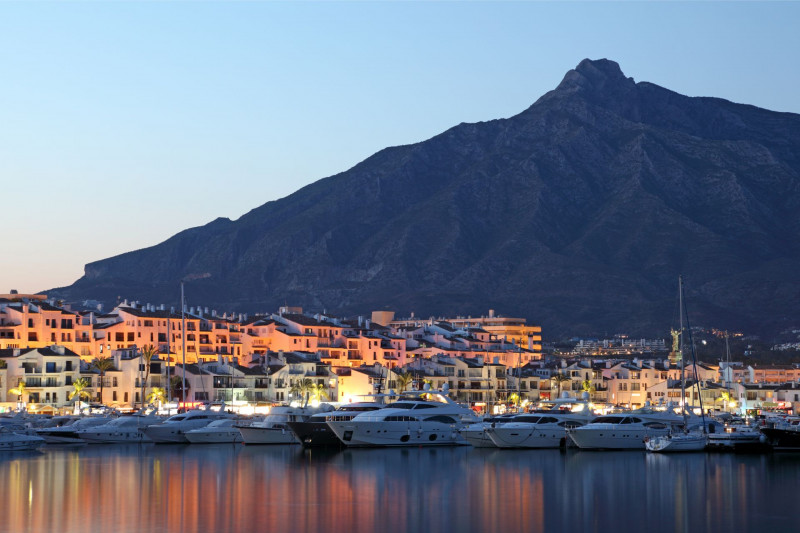
When most people hear "Puerto Banús," they picture rows of superyachts, high-end boutiques and sun-soaked terraces overlooking one of the Mediterranean's most photographed marinas. That image is accurate, but it captures only a fraction of what makes this Marbella enclave compelling as a property destination in 2026.
We've watched Puerto Banús mature from a glamorous marina-centric resort into a fully-fledged luxury residential market with its own distinct character, infrastructure and investment rationale. The marina remains the beating heart, certainly, but the property proposition extends far beyond waterfront views and proximity to designer shops.
The marina mystique and what it means for property values
The marina itself is undeniably a value driver. Properties within sight of the berths command premiums that reflect more than mere aesthetics. There's a lifestyle signalling aspect that matters to international buyers, a statement of arrival that few other Mediterranean addresses can match with quite the same intensity.
But we've noticed something interesting over the past few years. Buyers are increasingly looking two or three streets back from the port, seeking residential calm while maintaining that crucial postcode cachet. These slightly quieter addresses often deliver better value per square metre whilst retaining every practical advantage of the location.
The marina's global recognition does something else: it anchors Puerto Banús in the mental map of high-net-worth individuals worldwide. That brand equity translates into liquidity. When you eventually sell a Puerto Banús property, you're marketing to a pool of buyers who already understand the proposition without lengthy explanation.
Architectural evolution: From 1970s vision to 2026 reality
Puerto Banús was conceived in the early 1970s as an Andalusian-style marina village, whitewashed and terracotta-tiled, deliberately picturesque. Much of that original architectural DNA remains, particularly around the port itself, and it's aged remarkably well compared to other purpose-built resorts from that era.
What's changed is the residential stock surrounding the core. Modern developments have added contemporary villas and penthouses that respect the Mediterranean aesthetic whilst incorporating the amenities today's buyers expect: smart home systems, sustainable climate control, advanced security, wellness facilities.
By 2026, the architectural landscape represents several generations of design philosophy layered atop one another. You can still find original townhouses with quirky layouts and period charm. You can also acquire ultra-modern builds that wouldn't look out of place in Monaco or Geneva, yet they coexist without jarring because the palette and scale remain relatively consistent.
This architectural diversity means Puerto Banús can satisfy quite different buyer profiles, from those seeking established character to those wanting cutting-edge specification.
Price architecture: What different budgets buy in Puerto Banús
Understanding the price spectrum helps frame realistic expectations. The table below outlines typical asking ranges at the time of writing, drawn from active listings and recent transactions across Puerto Banús sub-markets:
Property Type | Typical €/sqm Range | Total Price Band | Characteristics |
|---|---|---|---|
Entry-level apartment (2-bed, inland) | €4,500 - €6,500/sqm | €350,000 - €550,000 | 80-100sqm, community amenities, 10-15 min walk to marina |
Mid-market villa (3-4 bed, second-line) | €6,000 - €9,000/sqm | €1.2M - €2.5M | 200-300sqm built, private pool, residential zone, 5-10 min drive to port |
Marina-front apartment (2-3 bed) | €9,000 - €13,000/sqm | €900,000 - €2M | 100-150sqm, direct harbour views, concierge, premium finishes |
Golf-adjacent villa (4-5 bed) | €5,500 - €8,000/sqm | €1.5M - €3M | 250-400sqm, golf course access, gated community, family-oriented |
Ultra-prime penthouse (marina or frontline) | €12,000 - €18,000+/sqm | €3M - €10M+ | 250-500sqm+, rooftop terraces, bespoke specification, trophy assets |
These bands shift with market sentiment, seasonality and individual property condition, but they provide a framework for budget setting and comparative value assessment.
The lifestyle premium: What you're really buying
Property in Puerto Banús carries a lifestyle premium, and understanding what you're paying for matters when evaluating value.
You're buying walkability in a region where car dependency is otherwise the norm. Restaurants, beaches, shops, fitness studios and social venues cluster within a compact, pedestrian-friendly area. For part-time residents especially, this eliminates the logistical friction that can diminish enjoyment of a holiday home.
You're buying a 12-month season. Unlike some Mediterranean destinations that effectively shut down outside summer, Puerto Banús maintains year-round vitality. The permanent and semi-permanent population supports businesses through winter, and the Costa del Sol's mild climate makes the shoulder seasons particularly attractive.
You're buying into an established international community. English is widely spoken, international schools are accessible within a 15-20 minute drive, and the infrastructure for expatriate life (legal, financial, medical services familiar with cross-border clients) is mature and competitive.
And, frankly, you're buying a certain theatre. Puerto Banús offers people-watching, social energy and a concentration of wealth that some find exhilarating and others exhausting. Knowing which camp you fall into before committing to a purchase is rather important.
Market dynamics in 2026: Demand drivers and buyer personas
The buyer profile in Puerto Banús has broadened considerably. Where once it was dominated by northern Europeans seeking sun and status, we now see significant interest from Middle Eastern families, Latin American investors, and younger wealth from the tech and finance sectors.
The northern European retiree
This buyer, typically aged 55-70, prioritises year-round climate, healthcare access and existing expatriate networks. They often downsize from larger family homes in Scandinavia, UK or Benelux countries, seeking a two- or three-bedroom apartment within walking distance of amenities. They favour second-line locations slightly inland from the marina core, where prices sit 20-30% below waterfront equivalents but still deliver the Puerto Banús address. Security, property management services and proximity to private health clinics rank high. They're long-term holders, often becoming permanent residents, and rarely rent out their properties.
The Middle Eastern family office
Representing family wealth from the Gulf states, this buyer seeks a European foothold offering privacy, prestige and potential residency pathways. Budgets typically start at €2 million and extend well beyond €10 million for exceptional villas. They prioritise gated communities, substantial outdoor space for extended family gatherings, and proximity to international schools following British or American curricula. Purchasing decisions often happen swiftly, sometimes sight-unseen, relying on trusted advisors and video tours. Properties serve as both investment assets and multi-generational holiday homes, used intensively during European summer and sporadically otherwise.
The digital entrepreneur
A newer demographic, aged 30-50, location-independent and seeking quality of life alongside connectivity. They favour modern apartments or compact villas with excellent internet infrastructure, contemporary workspace within the property, and proximity to co-working hubs and networking venues. Budgets range from €500,000 to €1.5 million. They view Puerto Banús as a base within a broader nomadic lifestyle, spending perhaps four to six months annually in residence and often renting the property short-term during absences. They're comfortable with technology, engaged with the sharing economy, and value experiences over square-metreage.
Rental investment fundamentals and 2026 regulatory context
Short-term rental yields in Puerto Banús can be attractive when properties and expectations are correctly aligned, though regulatory frameworks around holiday lets have tightened in recent years across Andalusia.
As of 2026, holiday rental properties in Puerto Banús must be registered with the Andalusian tourism registry and comply with municipal licensing requirements. Marbella municipality has introduced neighbourhood-specific quotas on new short-term rental licences, prioritising zones outside the historic core but still covering parts of Puerto Banús. Existing licences retain validity, but transferring a licence when selling a property has become more complex. Buyers intending rental income must verify licence status before completion and factor renewal or transfer costs into their planning.
Rental income taxation for non-resident owners stands at 19% on net rental profits for EU residents and 24% for non-EU residents, though double-taxation treaties often provide relief. Property management companies typically charge 15-25% of gross rental income, covering marketing, guest services, cleaning and maintenance. Owners should also budget 1-1.5% of property value annually for insurance, community fees, local property tax (IBI) and contingency repairs.
Occupancy rate benchmarks vary significantly by property type and location within Puerto Banús:
Property Type | Average Annual Occupancy | Gross Rental Yield Range | Peak Season Premium |
|---|---|---|---|
Marina-front penthouse | 18-24 weeks | 3.5% - 4.5% | July-August, Easter week |
Second-line villa (3-4 bed) | 20-28 weeks | 4.0% - 5.5% | July-August, Christmas/New Year |
Golf-adjacent townhouse | 16-22 weeks | 4.5% - 6.0% | April-October (golf season) |
These figures represent gross yields before costs. Net yields after management fees, maintenance and taxation typically sit 1.5-2.5 percentage points lower. Properties offering distinctive features (rooftop pools, recently renovated interiors, Smart home systems, unique views) command rental premiums of 20-40% over comparable but generic units.
The most successful rental properties target the shoulder seasons (April-June, September-October) when weather remains excellent but rates stay competitive. Relying solely on July-August peak weeks leaves properties vacant for long stretches and exposes owners to commoditised pricing competition.
Infrastructure and connectivity advantages
Puerto Banús benefits enormously from its position within the broader Marbella municipality and the wider Costa del Sol infrastructure. Málaga Airport lies roughly 60 kilometres northeast, offering direct flights to major European and some intercontinental cities. That journey takes under an hour in normal conditions, a crucial consideration for part-time residents and rental guests.
The coastal motorway provides straightforward access to Málaga itself, to Gibraltar (about 75 kilometres southwest), and to the expanding residential and commercial centres along the coast. Unlike some resort areas that feel isolated, Puerto Banús sits within a genuinely functional regional economy.
Telecommunications infrastructure has improved markedly. Reliable high-speed internet, once a frustration in parts of the Costa del Sol, is now largely a solved problem in Puerto Banús and surrounding areas. This matters increasingly to the remote-working demographic and digital entrepreneurs who represent a growing segment of buyers.
Healthcare infrastructure is another underappreciated advantage. Marbella hosts several well-regarded private hospitals and clinics accustomed to international patients. For retirees and families alike, this provides reassurance that might not factor into initial purchase decisions but proves significant over time.
Puerto Banús in competitive context: How it compares
Positioning Puerto Banús against neighbouring luxury markets clarifies its particular strengths and trade-offs. The table below compares three premium Costa del Sol addresses across variables that matter to buyers:
Factor | Puerto Banús | Marbella Golden Mile | Sotogrande |
|---|---|---|---|
Average €/sqm (prime) | €9,000 - €13,000 | €8,000 - €12,000 | €6,500 - €10,000 |
Walkability/amenity density | Excellent (compact, pedestrian core) | Good (more dispersed, car-useful) | Moderate (spread across zones, car essential) |
Year-round activity | High (12-month businesses, events) | Moderate-High (quieter in winter) | Moderate (seasonal, golf-driven) |
International school access | 15-20 min drive to multiple options | 10-15 min drive (closer to Marbella centre) | On-site international schools (Sotogrande International School) |
Rental yield potential | 3.5% - 5.5% gross | 3.0% - 4.5% gross | 3.0% - 4.0% gross |
Target buyer profile | Marina lifestyle, walkability seekers | Established luxury, golf, privacy | Equestrian, polo, long-term family estates |
Puerto Banús trades some of the Golden Mile's residential prestige for superior walkability and year-round vitality. It offers better rental income potential than Sotogrande but less space and tranquillity. Understanding these trade-offs helps buyers match their priorities to the right micro-market.
Comparing Puerto Banús to other Mediterranean luxury markets
We're often asked how Puerto Banús stacks up against alternatives: the French Riviera, Italian lakes, Greek islands, Portuguese Algarve.
Price per square metre remains lower than Cannes, Nice or Monaco equivalents, often substantially so, even after accounting for specification differences. You're trading some prestige and perhaps architectural heritage for better value and, arguably, better weather consistency.
The regulatory environment in Spain is generally more straightforward for property buyers than in some competing markets, though it still requires proper legal advice. Transaction costs sit somewhere in the middle range for Mediterranean property markets, typically 10-12% of purchase price including taxes, fees and legal costs.
Weather reliability favours the Costa del Sol. The microclimate delivers more sunshine hours than most French or Italian coastal alternatives, which matters if maximising property usage or rental income is a priority.
Cultural richness is where Italy and parts of France maintain advantages. Puerto Banús is purpose-built leisure infrastructure rather than an ancient town that has evolved organically. Some buyers find this refreshing and efficient, others miss the layered history and authenticity of older destinations. Knowing which resonates with you matters enormously for long-term satisfaction.
Due diligence essentials for prospective buyers
Purchasing property in Puerto Banús as a non-resident requires navigating Spanish legal and fiscal systems. The process is well-trodden, but corners should not be cut.
Engage a lawyer independent of the seller and the agent. Your lawyer conducts title searches, verifies planning compliance, checks for outstanding debts or charges against the property, and reviews community statutes. Budget €1,500-€3,000 for legal fees on a standard transaction, more for complex cases.
Obtain a NIE (foreigner identification number) early in the process. This tax identification number is required to complete the purchase and open Spanish bank accounts. Applications take several weeks, so starting promptly avoids delays at signing.
Factor all transaction costs into your budget. Beyond the purchase price, expect to pay:
- Transfer tax (ITP): 7% for resale properties in Andalusia (2026 rate)
- Stamp duty: approximately 1.5% for new builds
- Notary and registry fees: €1,000-€2,500
- Legal fees: €1,500-€3,000+
- Agent commission: typically paid by the seller, but verify
Some buyers structure purchases through Spanish or offshore companies for tax or succession planning reasons. This adds complexity and cost but may offer benefits depending on your circumstances and country of residence. Specialist cross-border tax advice is essential before committing to any structure.
For those exploring residency-by-investment pathways, Puerto Banús properties often meet or exceed the investment thresholds required for Spain's Golden Visa programme, which grants residency rights to non-EU nationals investing €500,000 or more in Spanish real estate.
Frequently asked questions
What is the process for non-residents buying property in Puerto Banús?
Non-residents can purchase Spanish property without significant restrictions. You'll need to obtain a NIE (foreigner identification number), open a Spanish bank account, and engage an independent lawyer to conduct due diligence and oversee the transaction. The process typically takes 8-12 weeks from offer acceptance to completion. Budget for transaction costs of around 10-12% of the purchase price, covering transfer tax, legal fees, notary and registry charges. Financing is available from Spanish banks for non-residents, though deposit requirements (typically 30-40%) and interest rates are higher than for residents.
How is rental income taxed for foreign property owners in Puerto Banús?
Non-resident landlords pay tax on net rental profits (gross income minus allowable expenses such as mortgage interest, maintenance, management fees, insurance and depreciation). The rate stands at 19% for EU/EEA residents and 24% for non-EU residents. Spain has double-taxation treaties with many countries, so you can typically offset Spanish tax paid against tax owed in your country of residence. Quarterly tax filings are required for rental income, and annual declarations consolidate the position. Engaging a gestor (Spanish tax advisor) simplifies compliance and typically costs €300-€600 annually for straightforward rental scenarios.
Which months generate the highest rental income in Puerto Banús?
Peak rental demand concentrates in July and August, when rates reach their annual highs but competition among properties is also most intense. Experienced landlords increasingly target shoulder months (April-June and September-October), when weather remains excellent, rates stay competitive, and longer booking windows become common. Christmas and New Year generate a short spike, particularly for larger villas accommodating family gatherings. Easter week also commands premium rates. Properties near golf courses see extended demand from April through October. Balancing peak and shoulder seasons typically delivers better annual occupancy and smoother cash flow than relying solely on summer lets.
Is a marina-front property worth the premium over second-line locations?
This depends entirely on your priorities. Marina-front properties command 30-50% premiums over comparable second-line equivalents, reflecting views, prestige and immediate access to the port's energy. If you plan substantial personal use, value walkability to restaurants and nightlife, and intend the property as a lifestyle asset rather than pure investment, the premium may deliver commensurate enjoyment. For rental investment focused on yield, second-line properties often outperform because acquisition costs sit lower whilst rental demand remains strong, particularly for families seeking space and relative quiet. Resale liquidity favours marina-front properties during buoyant markets but the gap narrows during corrections.
Does purchasing property in Puerto Banús qualify for Spain's Golden Visa?
Yes, provided the investment meets or exceeds €500,000. Properties above this threshold (whether a single property or multiple properties combined) grant eligibility for residency permits under Spain's investor visa programme, available to non-EU/EEA nationals. The permit allows you and immediate family members to live in Spain and travel within the Schengen zone. There is no minimum stay requirement to maintain the permit (though tax residency requires 183+ days annually), making it attractive for those seeking European access without relocating fully. The permit renews every two years initially, then every five years, and can lead to permanent residency and citizenship if you meet broader residency and integration requirements.
How close are international schools to Puerto Banús, and which are most popular?
Several well-regarded international schools sit within a 15-25 minute drive of Puerto Banús. Aloha College (British curriculum, IB programme) in Nueva Andalucía is perhaps the closest and most popular with Puerto Banús families, approximately ten minutes away. Swans International School (British) in Marbella centre lies about 15 minutes east. The English International College (British, IB) near Marbella also attracts families from Puerto Banús. For families prioritising on-site schooling, Sotogrande International School offers boarding and day options but requires a 30-minute commute. Most schools offer bus services covering Puerto Banús and surrounding areas, simplifying daily logistics for working parents.
Why we think Puerto Banús remains a resilient proposition
Markets fluctuate, sentiment shifts, and no property destination is immune to cycles. But Puerto Banús has demonstrated unusual resilience compared to many purpose-built resort markets, and several structural factors suggest that resilience will continue.
The global recognition of the brand provides a liquidity floor that many newer or less distinctive markets lack. Buyers exist worldwide who understand the product without extensive education, which matters enormously when selling.
The diversification of buyer nationalities and demographics reduces dependence on any single source market. When British demand softens, Middle Eastern or Scandinavian interest often compensates. This geographic and demographic spread provides ballast.
Infrastructure investment across the Costa del Sol continues, improving accessibility and extending the region's appeal beyond sun-and-beach tourism into year-round living. Puerto Banús benefits from these broader trends whilst maintaining its unique marina-centric identity.
And, perhaps most significantly, the lifestyle proposition remains difficult to replicate. The combination of Mediterranean climate, walkable luxury, established international community and year-round vitality exists in few places. Demand for that combination tends to be structurally robust, even as individual buyers rotate through.
If you're evaluating Puerto Banús as a potential property destination, we encourage a clear-eyed assessment of what you're buying and why. The marina glamour is real, but so are the practical advantages and the investment fundamentals. Understanding both dimensions leads to better decisions and, ultimately, greater satisfaction with whichever property you choose.
For personalised guidance on Puerto Banús property opportunities suited to your specific requirements, budget and timeline, explore our advisory services and speak with our team who specialise in Costa del Sol luxury markets.