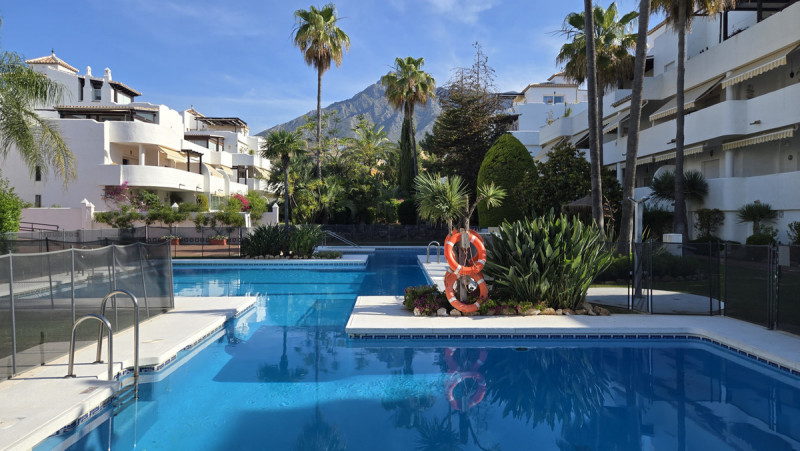
Marbella's Golden Mile represents one of Europe's most prestigious coastal addresses, stretching approximately six kilometres from the western edge of Marbella town to Puerto Banús. This strip of prime real estate combines beachfront luxury with mountain views, hosting some of Spain's most exclusive gated communities and apartment complexes. For buyers considering a Golden Mile apartment, understanding the full financial picture, the character of different communities and the factors that preserve resale value proves essential to making a sound investment. Buyers should also familiarise themselves with Spanish property tax obligations and ongoing compliance requirements beyond the purchase itself.
This guide breaks down the purchase costs, compares the key communities and examines what drives long-term value retention in this competitive market.
Understanding Marbella's Golden Mile

The Golden Mile designation covers both sides of the N-340 coastal road, with beachfront developments on the south and hillside complexes offering elevated sea views to the north. The area gained its name from the concentration of high-net-worth residents and luxury developments that emerged from the 1960s onward, centred around the Marbella Club Hotel.
Properties range from mid-rise apartment blocks built in the 1980s to contemporary complexes completed in the past decade. Proximity to beach clubs, the Puente Romano resort area and Puerto Banús marina makes the location particularly attractive to international buyers seeking year-round residence or holiday homes with strong rental potential.
Market activity on the Golden Mile tends to show resilience during broader property cycles, supported by limited supply of beachfront land and sustained demand from northern European and Middle Eastern buyers.
Purchase Costs and Fees for Golden Mile Apartments
Spanish property transactions carry several layers of cost beyond the agreed purchase price. For resale apartments on the Golden Mile, budget for the following:
Transfer tax (ITP): typically 7% of the declared purchase price in Andalucía at the time of writing. This applies to second-hand properties and forms the largest single additional cost.
Notary fees: approximately €600 to €1,200 depending on property value and complexity of the deed. The notary witnesses the sale and registers the title transfer.
Land Registry fees: around €400 to €800 to inscribe the new ownership in the Registro de la Propiedad.
Legal fees: most buyers engage a Spanish property lawyer to conduct due diligence, verify title, check community debts and coordinate completion. Expect 1% of purchase price plus VAT, or a minimum fixed fee of around €1,500 to €2,500 for straightforward transactions.
Mortgage arrangement costs (if financing): opening commission typically 0.5% to 1.5% of loan amount, plus valuation (€300 to €500) and bank legal fees.
On a €1 million Golden Mile apartment purchased as a resale, total acquisition costs commonly reach €85,000 to €95,000 once all fees and taxes are accounted for. For new-build purchases the structure differs, with 10% VAT replacing transfer tax and additional stamp duty.
Transaction Timeline: What to Expect

Golden Mile apartment purchases typically follow this sequence:
Reservation deposit (1-2 weeks): €3,000 to €10,000 to secure the property and remove it from active marketing while contracts are prepared.
Due diligence and NIE application (3-4 weeks): lawyer conducts searches, reviews community documentation and applies for your foreigner identification number.
Mortgage approval if needed (4-6 weeks): Spanish banks assess the valuation and your financial standing, then issue formal mortgage offer.
Completion at notary (1 day): all parties sign the escritura, funds transfer and keys are handed over.
Post-completion registry (2-4 weeks): notary submits documents to Land Registry to inscribe your ownership, issuing the final registered title deed.
Golden Mile lawyers familiar with international buyers often coordinate faster timelines by managing NIE applications and liaising with consulates directly, compressing the overall process to as little as six to eight weeks for cash purchases without complications.
Key Communities on the Golden Mile

Several communities dominate the Golden Mile apartment market, each with distinct character and buyer profile:
Puente Romano area: clusters of low-rise garden apartments surrounding the Puente Romano resort, many with direct access to beach clubs and subtropical gardens. Units here appeal to buyers prioritising lifestyle amenities and walkability to restaurants and tennis facilities.
Marbella Real and Los Verdiales: family-oriented complexes set back from the beach, offering larger floor plans (often 150 to 200 m²) and mature landscaping. These communities attract permanent residents and families valuing space and relative tranquillity over beachfront proximity.
Beachfront complexes near Marbella Club: smaller, older buildings with prime seafront positions. Apartments tend to be more compact but command premium prices for direct beach access and central Golden Mile location.
Altos de Puente Romano and Sierra Blanca foothills: hillside developments with panoramic sea views. These appeal to buyers prioritising privacy, views and often larger terraces, accepting a short drive to the beach.
Choosing between these zones depends on lifestyle priorities, budget and whether you value beachfront convenience or elevated views and quieter surroundings. For buyers comparing different Marbella locations, understanding the character of each micro-area can make the search more efficient.
Golden Mile Community Comparison
| Community | Beach Distance | Community Fee Range (monthly) | Average Apartment Size | Primary Buyer Profile |
|---|---|---|---|---|
| Puente Romano area | 0-100 metres | €350-€500 | 120-160 m² | International lifestyle buyers, holiday home investors |
| Marbella Real | 300-500 metres | €200-€300 | 150-200 m² | Families, permanent residents seeking space |
| Beachfront near Marbella Club | 0-50 metres | €400-€500 | 90-130 m² | Buyers prioritising direct beach access and location |
| Altos de Puente Romano | 800-1,200 metres | €250-€350 | 140-180 m² | View-focused buyers, those valuing privacy |
| Sierra Blanca foothills | 1,500-2,500 metres | €300-€450 | 160-220 m² | Buyers seeking elevated views, larger terraces, tranquillity |
Community Fees and Annual Costs
Spanish apartment ownership includes mandatory community fees (cuotas de comunidad) covering shared services and maintenance. Golden Mile communities typically charge €200 to €500 per month depending on facilities and property size.
Higher fees generally reflect:
24-hour security and concierge services
Multiple swimming pools and extensive gardens
On-site gyms, spas or tennis courts
Beachfront location requiring additional cleaning and upkeep
For a two-bedroom apartment in a well-maintained complex, annual community fees average €3,000 to €4,500. Larger penthouses or ground-floor units with private gardens often pay proportionally higher quotas.
Beyond community fees, budget for:
IBI (property tax): typically 0.4% to 1.1% of the cadastral value annually. On a €1 million property this often translates to €1,200 to €2,000 per year.
Basura (refuse collection): around €150 to €200 annually.
Utilities: water and electricity on normal consumption. Golden Mile properties connected to mains water face lower costs than developments relying on private wells.
Buildings insurance: approximately €300 to €500 per year for comprehensive cover on the structure itself (contents insurance sits separately).
Worked Example: Annual Holding Costs
For a €1 million two-bedroom apartment in the Puente Romano area with typical specifications:
IBI: €1,500 per year
Community fees: €4,200 per year (€350 monthly)
Basura: €150 per year
Buildings insurance: €300 per year
Total annual holding cost: approximately €6,150 before utilities or contents insurance
This figure assumes no mortgage. Owners letting the property may add management fees (typically 10-15% of rental income) and higher insurance premiums for short-term rental cover.
Resale Value Factors and Market Performance
Several factors determine how well a Golden Mile apartment holds or appreciates in value over time. Understanding these variables helps buyers select properties with stronger long-term prospects.
Beachfront vs hillside location: first-line beach apartments consistently command price premiums of 30% to 50% over equivalent hillside units. Beachfront properties also demonstrate faster capital appreciation during growth periods and greater resilience during downturns, supported by scarcity and sustained international demand for direct coastal access.
Community reputation and maintenance standards: well-managed communities with active presidents, adequate reserve funds and no history of special assessments attract repeat buyers and maintain values. Deferred maintenance, visible neglect of gardens or pools, or contentious community politics harm resale prospects. Buyers increasingly scrutinise community AGM minutes and reserve fund balances before committing.
Parking and storage provisions: dedicated underground parking spaces and storage rooms significantly enhance resale value and marketability. Properties lacking secure parking face narrower buyer pools, particularly among year-round residents and families. Adding a second parking space can lift asking prices by €30,000 to €50,000 in prime complexes.
Renovation status: recently renovated apartments with contemporary kitchens, updated bathrooms and modern systems (air conditioning, double glazing) sell faster and at premiums over original-condition units requiring immediate work. However, poorly executed or over-personalised renovations can deter buyers. Original-condition apartments in landmark buildings sometimes attract buyers seeking to create bespoke spaces.
Proximity to lifestyle anchors: apartments within walking distance of Puente Romano resort, beach clubs and Puerto Banús command measurable premiums. Properties requiring a car for restaurant access or beach visits appeal to narrower segments. Market activity shows resilience during broader cycles among these prime-location units, which maintain liquidity even when secondary zones slow.
The Golden Mile market demonstrated relative strength through the 2008-2013 correction, with beachfront apartments in established communities showing smaller percentage declines and faster recovery than inland developments. Properties under €1.5 million typically achieve sale within six to twelve months in balanced conditions, while units above €3 million may take eighteen months or longer to find suitable buyers. Buyers should also consider common Golden Mile purchasing mistakes when assessing long-term resale potential.
Legal and Administrative Considerations
Spanish property law requires buyers to obtain a NIE (foreigner identification number) before completing any purchase. The process takes one to four weeks depending on consulate workload.
Before signing a reservation or private purchase contract (contrato de arras), instruct a lawyer to conduct due diligence including:
Land Registry search to confirm clear title
Review of community statutes and recent AGM minutes
Check for outstanding community debts or special assessments
Verification that any reforms or extensions hold proper licences
Confirmation of building's legal status (particularly for older beachfront blocks)
The reservation contract typically requires a deposit of 10% of purchase price, which becomes non-refundable if the buyer withdraws without contractual grounds. Ensure all suspensive conditions (mortgage approval, satisfactory surveys) are documented clearly before parting with funds.
Most Golden Mile transactions complete within two to three months of reservation, though complex chains or mortgage financing can extend timelines. Budget time for opening Spanish bank accounts and arranging currency transfers if purchasing from outside the eurozone.
Frequently Asked Questions
What are the total fees when buying a €1 million Golden Mile apartment?
For a resale apartment at €1 million, expect approximately €85,000 to €95,000 in total acquisition costs. This includes 7% transfer tax (€70,000), notary and registry fees (€1,000-€2,000), legal fees (€10,000-€12,000 at 1% plus VAT), and mortgage arrangement costs if financing. New-build purchases incur 10% VAT instead of transfer tax, plus stamp duty, reaching similar overall levels.
Which Golden Mile community has the lowest community fees?
Marbella Real and similar second-line complexes typically charge the lowest fees, ranging from €200 to €300 monthly. These family-oriented developments offer fewer on-site amenities than beachfront resorts, reducing overhead. Beachfront complexes and those with extensive facilities (concierge, multiple pools, gyms) generally charge €350 to €500 monthly, reflecting higher maintenance and staffing costs.
Do you pay VAT or transfer tax on Golden Mile resales?
Resale apartments incur 7% transfer tax (ITP) in Andalucía, not VAT. Only new-build purchases from developers attract 10% VAT plus 1.5% stamp duty. The distinction matters significantly to acquisition budgets. Always verify the property's status with your lawyer: occasionally developers sell completed units as new despite prior temporary occupation, triggering VAT liability.
What is IBI and how much will I pay?
IBI (Impuesto sobre Bienes Inmuebles) is Spain's annual property tax, calculated on the cadastral value. For Golden Mile apartments this typically ranges from 0.4% to 1.1% of cadastral value, translating to €1,200-€2,000 annually on a €1 million property. Marbella municipality sets the rate. IBI bills arrive annually and can be paid in instalments or via direct debit.
How long does a Golden Mile apartment purchase take?
From reservation to completion, expect eight to twelve weeks for a straightforward cash purchase without complications. The process includes NIE application (three to four weeks), due diligence (two to three weeks), contract preparation (one to two weeks) and notary completion (coordinated once all checks clear). Mortgage financing adds four to six weeks. Post-completion Land Registry inscription takes two to four weeks but does not delay occupation.
Conclusion
Buying an apartment on Marbella's Golden Mile requires careful attention to acquisition costs, community selection and the factors that preserve resale value. Transfer tax at 7%, legal fees around 1% and smaller notary and registry charges combine to add roughly 9-10% to the headline purchase price for resale properties.
Community fees vary significantly, from €200 monthly in second-line family complexes to €500 in beachfront developments with full resort amenities. Annual holding costs including IBI, refuse charges and insurance typically total €6,000 to €9,000 for a mid-range apartment, rising for larger units or those with higher community quotas.
Beachfront location, community reputation, parking provision and proximity to lifestyle anchors such as Puente Romano and Puerto Banús consistently support resale values. Well-maintained apartments in established complexes with active communities outperform neglected properties or those in poorly managed developments.
Engaging experienced local legal counsel and allowing adequate time for due diligence ensures the transaction proceeds smoothly and the property's legal and financial status meets expectations. With careful selection and realistic budgeting for all costs, a Golden Mile apartment can deliver both lifestyle quality and sound capital performance in one of Europe's most enduring luxury markets. Buyers can also explore the agency's wider properties for sale in Marbella when comparing Golden Mile opportunities with other prime locations.