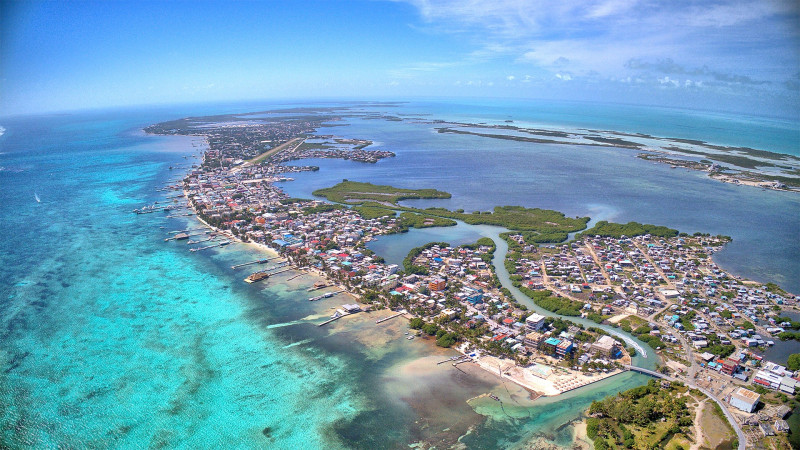
San Pedro, perched on Ambergris Caye, offers international buyers a rare combination: Caribbean beachfront living with English as the official language, no capital gains tax, and relatively straightforward foreign ownership rules. But purchasing coastal property in any jurisdiction demands careful planning, and Belize is no exception.
The turquoise water and white sand come with a distinct set of legal frameworks, environmental regulations and ownership structures that differ substantially from UK or North American property law. This guide walks you through the essential considerations before you commit to a beachfront purchase in San Pedro.
Understanding Property Ownership Rights for Foreign Buyers
Belize welcomes foreign property ownership with minimal restrictions. Non-citizens can own freehold property outright, with full title rights identical to those enjoyed by Belizean nationals. There is no requirement to form a local company or partner with a Belizean citizen for most purchases.
However, beachfront property carries one important caveat. Coastal land within a certain distance of the high-water mark may fall under different regulations or require additional approvals. Some prime beachfront parcels are held as leasehold rather than freehold, particularly older developments or land reclaimed from the government. Always verify the exact tenure type before making an offer.
Leasehold terms in Belize typically run 25, 50 or 99 years. While these can often be renewed, a leasehold interest will affect both your financing options and eventual resale value. Freehold beachfront property commands a premium precisely because it offers unrestricted ownership.
Legal Requirements and Restrictions for Beachfront Property
Belize maintains a coastal zone management framework designed to protect the marine environment and public beach access. The 66-foot coastal setback rule restricts development within 66 feet of the high-water mark, and any construction or modification in this zone requires specific approval from the Department of Environment and relevant coastal authorities.
You should also be aware that public access rights exist along Belizean beaches. Even if you own beachfront land, the public retains the right to use the area below the high-water mark. Attempting to block access or build permanent structures in these zones can result in enforcement action and fines.
Zoning regulations in San Pedro distinguish between residential, commercial and mixed-use areas. Beachfront plots may have density limits, setback requirements and height restrictions. The San Pedro Town Council enforces these rules, and violations discovered during a later title search can derail a sale or leave you liable for expensive remediation.
Before signing any purchase agreement, confirm that existing structures comply with all permits and that no outstanding enforcement notices affect the property. A buyer who purchased beachfront property on northern Ambergris Caye without commissioning an independent survey discovered that a neighbouring resort's dock encroached several feet onto his parcel, triggering a costly boundary dispute that took eighteen months to resolve.
The True Cost of Beachfront Property in San Pedro
Purchase prices for beachfront homes in San Pedro vary widely depending on location, build quality and proximity to the town centre. At the time of writing, entry-level beachfront condominiums start around USD 300,000, while luxury standalone villas with direct beach access can exceed USD 1.5 million.
Beyond the headline price, factor in the following transaction costs:
- Stamp duty: 5 per cent of the purchase price (or fair market value, whichever is higher)
- Property transfer tax: 5 per cent, bringing the combined government levy to 10 per cent
- Legal fees: typically 1 to 2 per cent of the purchase price
- Survey and valuation: USD 1,000 to USD 3,000 depending on plot size and complexity
- Title insurance: optional but recommended, usually around 0.5 per cent of the purchase price
If you are financing the purchase, add loan arrangement fees, which can be substantial for foreign borrowers. These transaction costs are higher than in the UK, so budget an additional 12 to 15 per cent on top of the agreed purchase price.
Total Acquisition Cost: Worked Examples for UK Buyers
The following table breaks down the all-in cost for three common price points, including government fees, professional costs and the GBP equivalent at the current exchange rate of approximately USD 1 = GBP 0.79:
Cost Component | USD 300,000 Purchase | USD 750,000 Purchase | USD 1,500,000 Purchase |
|---|---|---|---|
Purchase Price | USD 300,000 | USD 750,000 | USD 1,500,000 |
Stamp Duty (5%) | USD 15,000 | USD 37,500 | USD 75,000 |
Transfer Tax (5%) | USD 15,000 | USD 37,500 | USD 75,000 |
Legal Fees (2%) | USD 6,000 | USD 15,000 | USD 30,000 |
Survey | USD 2,000 | USD 2,500 | USD 3,000 |
Title Insurance (0.5%) | USD 1,500 | USD 3,750 | USD 7,500 |
Total Acquisition Cost (USD) | USD 339,500 | USD 846,250 | USD 1,690,500 |
Total Acquisition Cost (GBP) | GBP 268,205 | GBP 668,538 | GBP 1,337,495 |
These figures assume a straightforward freehold purchase with standard professional fees. Leasehold purchases, properties requiring planning approvals or transactions involving offshore structures may incur additional legal and advisory costs.
Financing Options for International Buyers
Mortgage financing for foreign buyers in Belize is limited but not impossible. Local banks such as Belize Bank and Atlantic Bank offer mortgages to non-residents, though terms are less favourable than those available to Belizean citizens.
Typical mortgage terms for foreign buyers:
- Loan-to-value ratio: 50 to 60 per cent maximum, meaning you need a 40 to 50 per cent deposit
- Interest rates: 8 to 12 per cent per annum (variable), significantly higher than UK mortgage rates
- Loan term: 10 to 20 years maximum
- Income verification: Extensive documentation required, including tax returns, employment letters and bank statements from your home country
Leasehold properties present additional financing challenges. Most Belizean lenders will not mortgage a property with fewer than 30 years remaining on the lease term, effectively limiting financing to longer leaseholds or requiring substantial cash reserves. This restriction makes freehold property far more attractive to buyers who need mortgage financing.
International lenders are an alternative. Some UK and offshore banks will lend against overseas property if you have sufficient equity in other assets or agree to cross-collateralisation. However, these loans typically carry higher arrangement fees and may be subject to currency exchange risk if your income is in GBP but the mortgage is denominated in USD.
Seller financing remains a practical option in the San Pedro market, particularly for motivated sellers or properties that have been listed for extended periods. Terms are negotiable, but typical arrangements involve a 20 to 30 per cent deposit, interest rates of 6 to 9 per cent, and a balloon payment after five to seven years. Ensure all seller-financed transactions are documented by an attorney and include title transfer protections.
If you are considering a beachfront property purchase and need flexible financing solutions, our team can connect you with advisors experienced in international property transactions. We specialise in helping UK buyers navigate overseas property markets and can recommend lenders, attorneys and structuring options tailored to your circumstances.
Due Diligence: Title Search and Land Registry
Belize operates a registered title system through the Lands and Surveys Department. A thorough title search is non-negotiable. Your attorney should verify that the seller holds clear, marketable title with no liens, encumbrances or boundary disputes.
Common title issues in San Pedro include:
- Unpaid property taxes creating a government charge
- Undisclosed easements for utilities or beach access
- Boundary discrepancies between the survey and the registered plan
- Family land claims, particularly on older parcels that have passed through multiple generations
Insist on an updated survey prepared by a licensed Belizean surveyor. Historical surveys may not reflect recent subdivisions, coastal erosion or encroachments by neighbouring properties. Coastal erosion is a real concern on Ambergris Caye, where shifting sand and storm damage can redraw property lines over time.
Title insurance, while not mandatory, provides peace of mind and financial protection if a defect emerges after closing. It is a small investment relative to the overall purchase price.
Environmental and Coastal Zone Regulations
Belize takes its environmental obligations seriously. The country is home to the Belize Barrier Reef, a UNESCO World Heritage Site, and development along the coast is subject to environmental impact assessments for larger projects.
If you plan to build or substantially renovate a beachfront home, you may need clearance from the Department of Environment. The coastal development approval process typically takes 12 to 16 weeks for straightforward residential projects, though more complex developments involving dredging, dock construction or significant site alteration can extend to six months or longer. Applications require detailed site plans, environmental impact statements and proof of compliance with setback and density regulations.
Construction scheduling is another critical consideration. Belize's rainy season runs from June through November, coinciding with the Atlantic hurricane season. Many contractors avoid major structural work during these months due to weather delays, material transportation challenges and the risk of storm damage to open construction sites. Plan your project timeline accordingly, as starting construction in December or January allows you to complete the bulk of weather-sensitive work before the following rainy season.
Hurricane preparedness is not optional for beachfront homeowners. Properties must meet wind-load standards appropriate to the region's exposure, including reinforced roof connections, impact-resistant windows and secure exterior doors. Building codes in San Pedro increasingly reference Miami-Dade hurricane standards, and failure to comply can result in building permit refusal or costly retrofits.
Insurance availability for beachfront properties in hurricane zones is limited. Windstorm premiums can add 2 to 4 per cent of the insured property value annually, with deductibles of 5 to 10 per cent of the claim. Some insurers exclude hurricane coverage entirely or impose strict construction and maintenance requirements. Flood insurance is a separate policy, and many UK-based insurers will not cover Caribbean coastal properties, forcing you to seek coverage through Belizean or regional Caribbean insurers.
Mangrove cutting is heavily restricted, and violations carry steep fines and potential criminal liability. Septic systems must meet strict standards to prevent contamination of coastal waters. Many newer developments in San Pedro are connected to municipal sewage systems, but older beachfront homes may rely on individual septic tanks that require regular maintenance and eventual replacement.
Check whether your property sits within any protected area or marine reserve buffer zone, as this can limit future development and impose additional compliance costs.
San Pedro Beachfront Ownership vs Other Caribbean Jurisdictions
UK buyers often compare Belize with other Caribbean and Latin American markets. The following table highlights key differences:
Jurisdiction | Foreign Ownership | Transaction Taxes | Title System | English Legal System |
|---|---|---|---|---|
Belize (San Pedro) | Unrestricted freehold | 10% (5% stamp + 5% transfer) | Registered title | Yes, English common law |
Mexico (Riviera Maya) | Restricted zone requires fideicomiso trust for beachfront | 2-4% acquisition tax + notary fees | Notarial system | No, civil law (Spanish) |
Dominican Republic | Unrestricted freehold | 3% transfer tax + legal fees | Registered title | No, civil law (Spanish) |
Costa Rica | Unrestricted freehold (concession only for some beaches) | 1.5% transfer + legal fees | Registered title | No, civil law (Spanish) |
Belize offers the advantage of English as the official language, English common law and a relatively transparent registered title system. However, transaction taxes are higher than in competing markets, and mortgage financing for foreigners is more restrictive. Mexico's fideicomiso trust structure adds complexity for beachfront purchases, while the Dominican Republic and Costa Rica offer lower transaction costs but lack the linguistic and legal familiarity that many UK buyers value.
Property Taxes and Ongoing Costs
Belize imposes an annual property tax based on the assessed value of land and improvements. Rates vary depending on property type and location, but residential beachfront property in San Pedro typically attracts an annual tax of 1 to 1.5 per cent of the assessed value. Assessment values are often below market value, so the effective tax rate may be lower than the nominal rate.
Homeowners' association fees are common in beachfront developments and can range from USD 100 to USD 500 per month depending on amenities such as pools, security, groundskeeping and shared dock facilities. Always request a breakdown of HOA fees and review the association's financial statements before purchasing.
Utilities, maintenance and staffing costs should also be factored into your budget. Electricity rates in Belize are among the highest in Central America, and air conditioning a beachfront home can result in monthly bills exceeding USD 300. Water and internet are additional recurring costs.
Infrastructure and Utilities in San Pedro
San Pedro Town has made significant infrastructure improvements, but beachfront properties outside the town centre may face limitations. Electricity is generally reliable, though outages during storms are common. Many beachfront homes install backup generators or solar panels to ensure continuity.
Municipal water service is available in most developed areas, but water quality can be inconsistent. Many homeowners install filtration systems or rely on bottled water for drinking. Properties outside the municipal service area may use private wells or rainwater catchment systems.
High-speed internet is increasingly available in San Pedro, with fibre-optic connections in the town centre and reliable wireless options in outlying areas. Mobile phone coverage is good along the main coastal strip but can be patchy in remote northern or southern sections of the island.
Road access varies significantly. The main road through San Pedro is paved, but many beachfront properties are accessed via sand tracks that become difficult to navigate during heavy rain. Golf carts are the primary mode of local transport, and you should factor in the cost of purchasing and maintaining a vehicle suitable for island conditions.
Rental Income Potential and Restrictions
Many beachfront buyers in San Pedro view their property as both a personal retreat and an income-generating investment. The island has a well-established short-term rental market serving tourists, divers and expatriates.
There are no legal restrictions on renting out your beachfront home, and many owners generate sufficient rental income to cover property taxes, HOA fees and maintenance costs during the months they are not using the property themselves. High season (December through April) commands premium nightly rates, while the summer and rainy season see lower occupancy and reduced pricing.
However, rental management is essential if you are not resident on the island. Property management companies in San Pedro typically charge 20 to 30 per cent of gross rental income and handle marketing, guest check-in, cleaning and routine maintenance. Choose a reputable manager with a proven track record, as poor management can lead to property damage, negative reviews and lost income.
Check whether your HOA or leasehold agreement imposes any restrictions on short-term rentals. Some developments limit rental activity or require approval before listing on platforms such as Airbnb or VRBO.
Frequently Asked Questions
Can UK citizens get mortgages in Belize?
Yes, but options are limited. Local Belizean banks such as Belize Bank and Atlantic Bank offer mortgages to foreign buyers, typically with loan-to-value ratios of 50 to 60 per cent, interest rates of 8 to 12 per cent, and loan terms of 10 to 20 years. You will need substantial documentation including tax returns, employment verification and bank statements. Alternatively, some UK or offshore lenders may finance overseas property using cross-collateralisation against other assets.
What is the 66-foot coastal setback rule?
The 66-foot coastal setback restricts development within 66 feet of the high-water mark. Any construction, major renovation or alteration within this zone requires approval from the Department of Environment and relevant coastal authorities. The rule is designed to protect the marine environment, preserve public beach access and reduce erosion risk. Violations can result in fines, demolition orders or legal action.
Leasehold vs freehold: which is better?
Freehold is generally preferable for beachfront property in San Pedro. Freehold gives you unrestricted ownership with no expiry date, making financing easier and resale value higher. Leasehold terms in Belize typically run 25, 50 or 99 years and can often be renewed, but lenders are reluctant to mortgage properties with fewer than 30 years remaining on the lease. Leasehold may be your only option for certain prime beachfront parcels, but freehold should always be your first choice if available.
Are there property taxes in San Pedro?
Yes. Belize imposes an annual property tax based on the assessed value of land and improvements. Residential beachfront property in San Pedro typically attracts a rate of 1 to 1.5 per cent of the assessed value, which is often below market value. Property taxes are payable annually, and unpaid taxes create a government lien on the property that must be cleared before any sale or transfer.
Can I rent out my beachfront home?
Yes. There are no legal restrictions on renting out your property in Belize, and San Pedro has a strong short-term rental market. Many beachfront owners generate rental income to offset holding costs. However, check your homeowners' association rules and leasehold agreement (if applicable) for any restrictions on rental activity. Property management companies typically charge 20 to 30 per cent of gross rental income.
What happens if I find a title defect after purchase?
Title defects discovered after closing can be costly and time-consuming to resolve. Common issues include unpaid liens, boundary disputes, undisclosed easements and family land claims. This is why thorough due diligence and title insurance are essential. Title insurance covers legal costs and financial loss if a defect emerges post-purchase, up to the policy limit. Without insurance, you may face protracted litigation and potential loss of property or investment.
Comparing Caribbean Markets: Why San Pedro Appeals to UK Buyers
San Pedro offers several advantages for UK buyers accustomed to English common law and transparent property systems. English is the official language of Belize, eliminating translation errors and simplifying contract review. The legal framework is familiar, with registered titles, solicitor-led conveyancing and recognisable concepts such as freehold and leasehold.
However, transaction taxes are higher than in competing markets such as Mexico or Costa Rica, and financing options are more limited. The trade-off is a stable political environment, no capital gains tax for non-residents, and a welcoming expatriate community with established infrastructure.
For many UK buyers, the linguistic and legal familiarity outweighs the higher transaction costs, particularly when purchasing a second home or retirement property where language barriers and unfamiliar legal systems pose greater risk.
Final Recommendations
Buying beachfront property in San Pedro can be a rewarding investment, but only if you approach the transaction with realistic expectations and thorough preparation. Engage a Belizean attorney experienced in beachfront transactions, commission an independent survey, and verify every aspect of title, zoning and environmental compliance.
Budget for the full acquisition cost, including the 10 per cent government levy and professional fees. Understand the limitations of mortgage financing and plan your capital accordingly. If you are considering a leasehold property, scrutinise the lease term and renewal provisions carefully.
Factor in ongoing costs including property tax, HOA fees, utilities, insurance and maintenance. Beachfront properties require more intensive upkeep than inland homes, and storm damage, saltwater corrosion and tropical climate all accelerate wear and tear.
Finally, consider your long-term plans. Is this a retirement home, a vacation property, a rental investment, or some combination? Your answer will shape your choice of location, property type and ownership structure.
San Pedro offers a unique blend of Caribbean lifestyle, accessible real estate laws and strong community infrastructure. With careful planning and professional guidance, a beachfront home on Ambergris Caye can deliver both personal enjoyment and financial value for years to come.