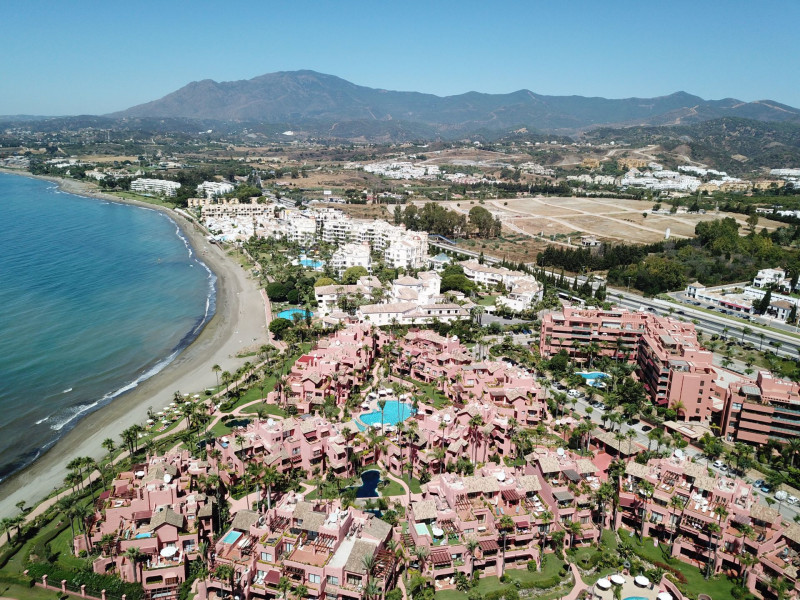
San Pedro de Alcántara has evolved from a quiet coastal town into one of the Costa del Sol's most sought-after residential destinations. Sitting within the Marbella municipality yet retaining its distinct character, San Pedro combines authentic Spanish village life with proximity to Puerto Banús and Marbella's amenities. For UK buyers weighing a permanent move or investment property, understanding the practicalities of taxation, education, healthcare and market dynamics matters as much as finding the right villa or apartment.
This guide breaks down what you need to know before committing to property in San Pedro de Alcántara in 2026.
Property Market Overview and Investment Climate
San Pedro de Alcántara's property landscape spans renovated townhouses in the historic centre, beachfront apartments along the newly expanded Boulevard, and hillside villas in developments like Nueva Alcántara and Los Naranjos. The town has benefited from significant infrastructure investment over recent years, including promenade upgrades and improved transport links that have narrowed the gap between San Pedro prices and central Marbella.
The market here attracts a mix of permanent relocators, second-home buyers and rental investors targeting the year-round demand driven by families and remote workers. Proximity to international schools and a more relaxed pace than Marbella proper make San Pedro particularly appealing to buyers prioritising lifestyle balance over pure capital appreciation.
Spanish Property Taxes: What Buyers Need to Know
Spanish property ownership brings recurring tax obligations that differ markedly from the UK system. Budgeting for these costs from the outset prevents unpleasant surprises.
IBI (Impuesto sobre Bienes Inmuebles)
The IBI is Spain's annual property tax, levied by the local municipality. Rates vary by cadastral value and location, but owners in San Pedro typically pay between 0.4% and 1.1% of the cadastral value each year. A property with a cadastral value of €300,000 might face an annual IBI bill in the region of €1,200 to €3,300, depending on the precise rate set by Marbella council.
IBI bills arrive annually and are payable in instalments or as a lump sum. Non-payment can result in penalties and, ultimately, a charge against the property.
Non-Resident Income Tax
If you do not reside in Spain for more than 183 days per year, you are classified as a non-resident for tax purposes. Non-residents must file an annual declaration and pay tax on deemed rental income, even if the property remains empty. The Spanish tax authority applies a notional rental value, typically 1.1% to 2% of the cadastral value, and taxes it at 19% for EU residents or 24% for non-EU nationals.
For a property with a cadastral value of €400,000, the deemed income might be €4,400 per annum, generating a tax liability of around €836 for an EU resident. If you do let the property, actual rental income is taxed at the same rates, with limited deductions available for non-residents.
Wealth Tax Considerations
Spain's Impuesto sobre el Patrimonio applies to worldwide assets for residents and Spanish assets for non-residents. Thresholds and rates vary by autonomous community. Andalucía, which governs the Costa del Sol, currently offers an exemption on the first €700,000 of wealth per individual, with progressive rates thereafter.
Recent years have seen political debate over wealth tax reform, so buyers with significant portfolios should monitor legislative changes and consider structuring options that may mitigate exposure.
Transfer Tax and Stamp Duty
Purchasing resale property in Andalucía incurs Impuesto de Transmisiones Patrimoniales at a progressive rate. Properties up to €400,000 are taxed at 8%, rising to 9% between €400,000 and €700,000, and 10% above €700,000. New-build purchases are instead subject to VAT at 10%, plus stamp duty at 1.5%.
Total acquisition costs, including legal fees, notary and Land Registry charges, typically add 10% to 13% to the headline price for resale properties and around 12% to 15% for new builds.
Annual Holding Cost Comparison
Understanding the total annual tax burden helps with long-term budgeting. The table below shows estimated IBI, non-resident tax and total annual holding costs for three common property price points in San Pedro de Alcántara, assuming typical cadastral-value-to-market-price ratios and non-resident status:
Line Item | €300k Property | €500k Property | €800k Property |
|---|---|---|---|
Purchase Price | €300,000 | €500,000 | €800,000 |
Est. Cadastral Value | €180,000 | €300,000 | €480,000 |
Annual IBI (0.7% avg) | €1,260 | €2,100 | €3,360 |
Non-Resident Tax (1.1% cadastral × 19%) | €376 | €627 | €1,003 |
Community Fees (avg estimate) | €800 | €1,200 | €1,800 |
Total Annual Holding Cost | €2,436 | €3,927 | €6,163 |
These figures assume the property remains empty and exclude utility standing charges, insurance and maintenance. If you rent the property, actual rental income replaces the deemed figure but is taxed at the same 19% rate for EU non-residents.
Worked Example: UK Buyer Purchasing a €450,000 Apartment
To illustrate the upfront and recurring costs, consider a UK buyer acquiring a resale apartment in San Pedro for €450,000 in 2026.
Step 1: Transfer Tax
Purchase price €450,000 falls into the 9% ITP bracket (€400,000 to €700,000 band in Andalucía).
Transfer tax: €450,000 × 9% = €40,500
Step 2: Legal and Notary Fees
Legal fees typically run 1% to 1.5% of purchase price. Assume 1.2%: €450,000 × 1.2% = €5,400.
Notary and Land Registry fees add approximately €1,500.
Total professional fees: €6,900
Step 3: Total Acquisition Cost
Purchase price: €450,000
Transfer tax: €40,500
Professional fees: €6,900
Grand total: €497,400
Step 4: Annual IBI Estimate
Assume cadastral value is 60% of purchase price: €450,000 × 60% = €270,000.
Annual IBI at 0.7% average: €270,000 × 0.7% = €1,890
Step 5: Non-Resident Tax if Empty
Deemed rental income: €270,000 × 1.1% = €2,970
Tax at 19%: €2,970 × 19% = €564 per annum
Step 6: Community Fees
Typical apartment community fees in San Pedro: approximately €1,000 per year
Annual Holding Cost Summary for €450k Property:
IBI: €1,890
Non-resident tax: €564
Community fees: €1,000
Total: €3,454 per annum
This worked example excludes utilities, insurance and any rental income that would offset the non-resident tax liability.
Schools and Education in San Pedro de Alcántara
Education infrastructure is a decisive factor for families relocating to Spain. San Pedro offers a blend of Spanish state schools and international options within a short drive.
International Schools
The town itself does not host a major international school campus, but several well-regarded institutions lie within 10 to 20 minutes. Aloha College in Nueva Andalucía follows the British curriculum and is popular with expatriate families, offering IGCSE and A-levels. The English International College in Marbella provides another British-curriculum option.
Further afield, Swans International School in Marbella and The British College of Marbella cater to different age groups and curricula. Fees at these schools generally range from €6,000 to €12,000 per year, depending on year group and additional services.
Transport is straightforward, with many schools running private bus routes through San Pedro. Proximity to these schools has become a pricing factor in neighbourhoods like Linda Vista and El Paraíso.
Spanish State Schools
Families integrating fully into Spanish life can access free state education. Primary schools such as CEIP San Pedro de Alcántara and secondary provision at IES Mar y Sol deliver the Spanish national curriculum. Class sizes tend to be larger than in private schools, and instruction is in Spanish, which can present a steep learning curve for children arriving without the language.
Immersion in the state system accelerates language acquisition, and many families find that children adapt within a year or two. For those planning a long-term stay, this route offers both cost savings and cultural integration.
State schools follow the Spanish academic calendar, with terms running from mid-September to late June and a long summer break. Enrolment requires registration at the local town hall with proof of residence, the child's birth certificate and passport, and an empadronamiento certificate.
Children typically start primary education at age six and progress through six years of Educación Primaria, followed by four years of Educación Secundaria Obligatoria. The curriculum includes Lengua Castellana, Matemáticas, Ciencias Naturales and Ciencias Sociales, alongside physical education and arts.
Extracurricular language support for non-Spanish-speaking children varies by school. Some centres offer additional tuition, but many rely on immersion. Private tutoring in Spanish as a second language is widely available in San Pedro and can smooth the transition.
Homologation and UK Qualification Equivalency
Families moving between the UK and Spanish education systems often face questions about qualification recognition. If a child completes GCSEs or A-levels in the UK and then enrols in a Spanish state university, the qualifications must be homologated by the Spanish Ministry of Education.
Homologación is the process of officially recognising foreign qualifications as equivalent to Spanish credentials. GCSEs typically equate to the Graduado en Educación Secundaria Obligatoria, while A-levels correspond to the Spanish Bachillerato. The process requires submitting certified translations, original certificates and a completed application to the Ministry, and can take several months.
For families planning to return to the UK, Spanish qualifications may require equivalency statements from UK NARIC, the national agency that assesses international credentials. The process is generally smoother if children sit recognised international exams such as IGCSEs or the International Baccalaureate, which enjoy broad recognition in both jurisdictions.
Consulting an education advisor before relocating can clarify pathways and avoid gaps in progression. Many international schools in the area employ staff familiar with cross-border transitions and can guide families through homologation procedures.
Healthcare System and Access
Spain's public healthcare system ranks highly in international comparisons, but access and coverage depend on residency status and contributions. Understanding the options and obligations is essential for anyone spending significant time in San Pedro.
Public Healthcare Registration
Residents registered with the Spanish social security system, either through employment or as self-employed contributors, access public healthcare at little or no direct cost. UK nationals who were resident in Spain before the end of the Brexit transition period retain rights under the Withdrawal Agreement. Those moving after that date must register and contribute to qualify.
Retirees can access public healthcare if they hold an S1 certificate from the UK, which covers the cost through a reciprocal arrangement. However, political and administrative shifts mean this route requires staying current with UK pension rules and Spanish registration procedures.
San Pedro residents use the Centro de Salud San Pedro de Alcántara for primary care, located at Calle Andalucía in the town centre. The health centre provides general practitioner consultations, nursing services, paediatrics and some diagnostic facilities. Referrals to specialists and hospital treatment are managed through Hospital Costa del Sol in Marbella, approximately 15 minutes by car.
Waiting times for non-urgent procedures can be longer than in the UK private sector, though emergency care is prompt and of high quality. Prescription medications in Spain often carry a co-payment, typically 40% to 60% of the cost for working-age patients, capped at a monthly maximum.
Private Health Insurance Options
Many expatriates and part-year residents opt for private health insurance, which provides faster access to specialists, English-speaking doctors and a wider choice of facilities. Policies from providers such as Sanitas, Asisa and Adeslas typically cost between €60 and €150 per month per adult, depending on age, pre-existing conditions and coverage level.
Private insurance is often a condition of securing a non-lucrative visa or Golden Visa residency, so buyers planning to spend significant time in Spain should budget for this recurring expense.
Private facilities near San Pedro include Hospital Quirónsalud Marbella and HC Marbella International Hospital, both offering comprehensive services with multilingual staff. Dental and optical care are generally excluded from public coverage, making private insurance attractive for families.
EHIC and Travel Insurance for Non-Residents
UK nationals visiting Spain for short periods can use the UK Global Health Insurance Card, which replaced the European Health Insurance Card post-Brexit. The GHIC provides access to necessary state healthcare during temporary stays at the same cost as Spanish residents, but it does not cover repatriation, routine care or ongoing treatment.
Non-residents who do not qualify for public healthcare and do not hold private insurance should ensure comprehensive travel insurance covers medical emergencies. Relying solely on the GHIC leaves gaps in cover and can result in significant out-of-pocket costs for anything beyond emergency stabilisation.
Public vs Private Healthcare: Coverage Comparison
The table below outlines typical coverage scenarios for public and private healthcare in San Pedro de Alcántara, helping buyers assess which route suits their needs:
Service / Scenario | Public Healthcare (Resident) | Private Insurance |
|---|---|---|
GP Consultation | Free with health card | Copay €0-€30 or free depending on policy |
Specialist Referral | Free, wait time variable (weeks to months) | Direct access, usually within days |
Emergency Hospital Care | Free | Free or minimal copay |
Elective Surgery | Free, waiting list applies | Fast-track, choice of surgeon and facility |
Prescription Drugs | 40-60% copay (capped monthly) | Often 100% covered or reduced copay |
Dental and Optical | Not covered | Often included or available as add-on |
English-Speaking Doctors | Limited availability | Widely available at private clinics |
Mental Health Services | Available, referral required, wait times | Direct access, broader provider network |
Families with young children often value the flexibility and speed of private insurance, while healthy retirees with S1 certificates may find public provision sufficient, supplemented by private dental and optical plans.
Infrastructure and Connectivity
San Pedro's appeal has been amplified by infrastructure improvements that enhance daily living and rental attractiveness. The Boulevard promenade now stretches several kilometres along the beachfront, lined with restaurants, cafes and cycle paths. This has shifted the town's centre of gravity towards the coast and driven demand for beachside apartments.
Road connectivity remains excellent. The AP-7 toll motorway and A-7 coast road link San Pedro to Málaga airport in under 45 minutes and to Gibraltar in around an hour. The town centre itself has undergone pedestrianisation and parking upgrades, easing congestion that once plagued the main avenues.
Public transport includes local bus services connecting San Pedro to Marbella, Puerto Banús and neighbouring towns. Frequency is adequate for daily commuting, though most residents rely on private vehicles for flexibility.
2026 Market Outlook and Infrastructure Impact
San Pedro de Alcántara's property market in 2026 reflects the combined effect of sustained demand, infrastructure enhancements and regional economic stability. The Boulevard expansion has been a catalyst, raising the profile of beachfront and near-beach properties. Neighbourhoods such as Linda Vista, El Paraíso and Nueva Alcántara have seen notable value growth as buyers prioritise walkable access to the promenade and improved amenities.
Transport links continue to strengthen. Upgrades to the AP-7 and A-7 corridors have reduced journey times to Málaga and improved commuter appeal for remote workers and airport-dependent professionals. The regional government has signalled further investment in sustainable transport, including expanded cycle infrastructure and potential light-rail studies for the western Costa del Sol, although concrete timelines remain uncertain.
Commercial development in the town centre has accelerated, with new retail, dining and co-working spaces attracting younger demographics and diversifying the resident base beyond retirees and second-home owners. This broadening of the tenant and buyer pool supports rental yields and underpins price stability.
Neighbourhoods benefiting most from these trends include:
- Linda Vista: Hillside location with sea views, strong demand from families seeking proximity to schools and the Boulevard.
- El Paraíso: Established residential area with golf courses and mature landscaping, popular with golf enthusiasts and retirees.
- Nueva Alcántara: Modern developments offering contemporary finishes and communal facilities, appealing to remote workers and younger buyers.
While the broader Costa del Sol market faces headwinds from rising interest rates and economic uncertainty in key buyer markets, San Pedro's blend of lifestyle appeal, infrastructure investment and relative affordability compared to central Marbella positions it favourably for steady demand in the medium term.
Frequently Asked Questions
Do I pay tax on an empty Spanish property?
Yes. Non-residents must pay tax on deemed rental income even if the property remains empty. The Spanish tax authority applies a notional rental value of 1.1% to 2% of the cadastral value and taxes it at 19% for EU residents. This annual obligation applies regardless of whether you generate rental income.
Which international schools serve San Pedro de Alcántara?
San Pedro does not have an international school within the town itself, but several are within a 10 to 20-minute drive. Aloha College in Nueva Andalucía offers the British curriculum with IGCSE and A-levels. The English International College, Swans International School and The British College of Marbella provide additional British-curriculum options. Many schools operate bus routes through San Pedro.
Can non-residents access Spanish public healthcare?
Non-residents generally cannot access free public healthcare unless they hold an S1 certificate covering state pension healthcare or register and contribute to the Spanish social security system. Short-term visitors can use the UK Global Health Insurance Card for emergency and necessary treatment, but this does not replace comprehensive insurance. Most non-residents opt for private health insurance to ensure prompt access and English-speaking doctors.
What is the cadastral value and how does it affect my taxes?
The cadastral value is the official valuation assigned by the Spanish tax authority, typically 50% to 70% of market value. It determines your annual IBI property tax and the base for non-resident income tax calculations. Cadastral values are periodically updated and can be challenged if they appear disproportionate to market conditions.
How long does property purchase take in Spain?
From initial offer to completion, the process typically takes six to twelve weeks for a straightforward resale purchase, assuming no chain and prompt mortgage approval if financing is involved. Delays can arise from Land Registry checks, power of attorney arrangements or complex title issues. New-build purchases often have longer timelines tied to construction schedules.
Are there restrictions on foreign buyers in Spain?
No. Spain places no restrictions on non-residents or foreign nationals purchasing property. UK buyers post-Brexit face the same process as before, though residency and tax treatment differ. Buyers from outside the EU may need to obtain a foreign investor number and follow additional administrative steps, but ownership rights are equivalent.
Practical Considerations for Buyers
Beyond taxation and infrastructure, several practical factors shape the ownership experience in San Pedro de Alcántara.
Community fees vary widely depending on development size, facilities and management standards. Gated complexes with pools, gyms and 24-hour security command higher fees, typically €1,200 to €3,000 per year for an apartment. Townhouses in smaller developments may pay €800 to €1,500 annually. Always request a copy of the community statutes and recent meeting minutes before committing.
Utility connections are generally reliable. Electricity, water and internet are widely available, though some rural properties may face connectivity limitations. Setting up utilities requires an NIE number and can involve modest connection fees. Budgeting €100 to €200 per month for a two-bedroom apartment covers typical utility use, though air conditioning in summer can increase electricity bills substantially.
Rental licensing in Andalucía requires properties offered for tourist rental to register with the regional tourism authority and meet specific standards, including public liability insurance and safety compliance. Unlicensed tourist rentals risk fines and removal from booking platforms. Long-term rental regulations are less onerous but still require formal contracts and adherence to tenant protection laws.
Currency considerations matter for UK buyers financing in sterling. Exchange rate fluctuations can materially affect the effective purchase price and ongoing costs. Many buyers lock in rates using forward contracts or consider financing in euros to match income and expenditure currencies.
Why San Pedro Appeals to UK Buyers
San Pedro de Alcántara's combination of authentic Spanish atmosphere, high-quality infrastructure and proximity to Marbella's international amenities creates a compelling proposition for UK buyers. The town retains a village feel despite rapid growth, with weekly markets, tapas bars and a strong Spanish resident base that contrasts with the more transient expatriate populations in nearby resort areas.
For families, the balance of international schooling options and Spanish state provision allows tailored education pathways. Healthcare access, whether through public registration or private insurance, meets the standards UK residents expect. The climate, outdoor lifestyle and lower cost of living compared to equivalent UK locations reinforce the appeal for retirees and remote workers alike.
Investment buyers value San Pedro's rental demand, driven by both long-term tenants and holiday visitors. The town's year-round activity supports occupancy rates that many purely seasonal destinations cannot match, while capital appreciation benefits from infrastructure improvements and sustained buyer interest.
If you're considering a move to the Costa del Sol and want expert guidance on navigating Spanish property tax, residency options and investment strategy, Fraser Bond offers tailored support for UK buyers. Our team understands the practicalities of cross-border property purchase and can help you make informed decisions that align with your financial and lifestyle goals.
Reach out to Fraser Bond today to discuss your San Pedro de Alcántara property plans and access the insights that make the difference between a smooth transaction and a costly misstep.